Beyond engineering: why 3D simulation is becoming a core business capability in manufacturing
Simulation is evolving beyond engineering. Explore how manufacturers use 3D simulation and virtual commissioning to improve sales, reduce risk, validate investments and optimize operations throughout the production lifecycle. Learn from SEJFO Group, Konecranes Agilon, Vaisala, and Pivatic.
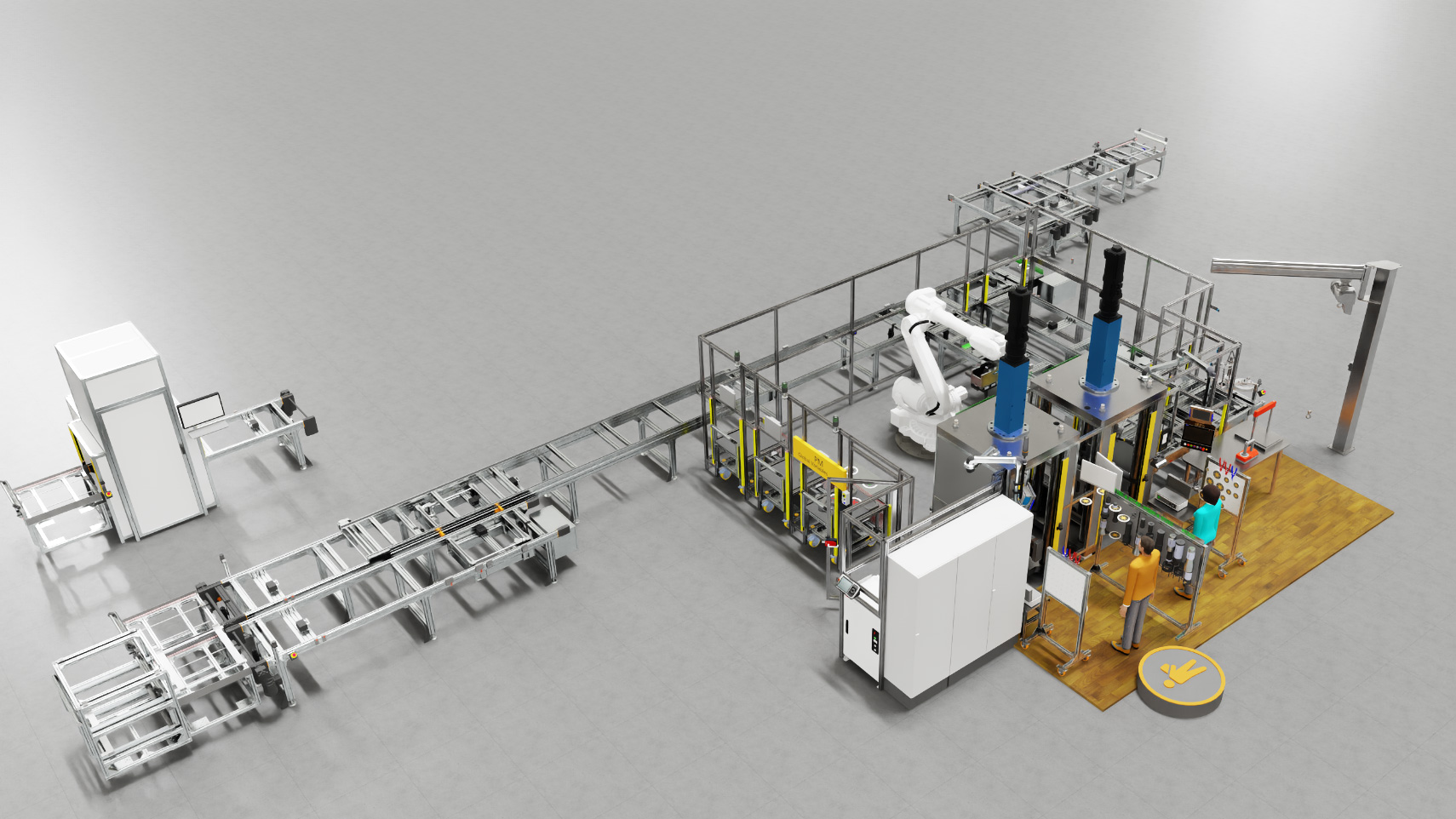
For decades, manufacturing simulation was viewed primarily as an engineering tool. It helped validate layouts, test automation concepts, and check cycle times before equipment was installed. Important work, certainly, but often limited to a specific phase of a project and a specific group of users.
That view is rapidly changing.
Today, manufacturers, system integrators, machine builders, and automation teams are using simulation and virtual commissioning to improve far more than engineering outcomes. They are accelerating sales, reducing project risk, improving collaboration, shortening commissioning timelines and creating the foundation for continuous operational improvement. Simulation is evolving from a project tool into a business capability.
The experiences of SEJFO Group, Konecranes Agilon, Vaisala, and Pivatic reveal a broader shift taking place across manufacturing. While each company operates in a different industry, they all reached the same realization: when teams can test, understand and validate the future before it exists physically, they make better business decisions.
Complexity is no longer the exception
Manufacturing systems are more connected, automated, and customized than ever before. A modern project can involve robots, conveyors, software systems, AGVs, PLCs, operators and multiple stakeholders across different departments and locations. At the same time, customers expect faster delivery and greater certainty from increasingly complex solutions.
The challenge is not simply designing these systems. It is helping people understand them. At SEJFO Group, increasingly sophisticated automation concepts became difficult to communicate through CAD drawings and presentations alone. Different stakeholders interpreted the same proposal differently, creating uncertainty during the sales process.
“It was unclear communication. It was very much up to the interpretation of the customer.”
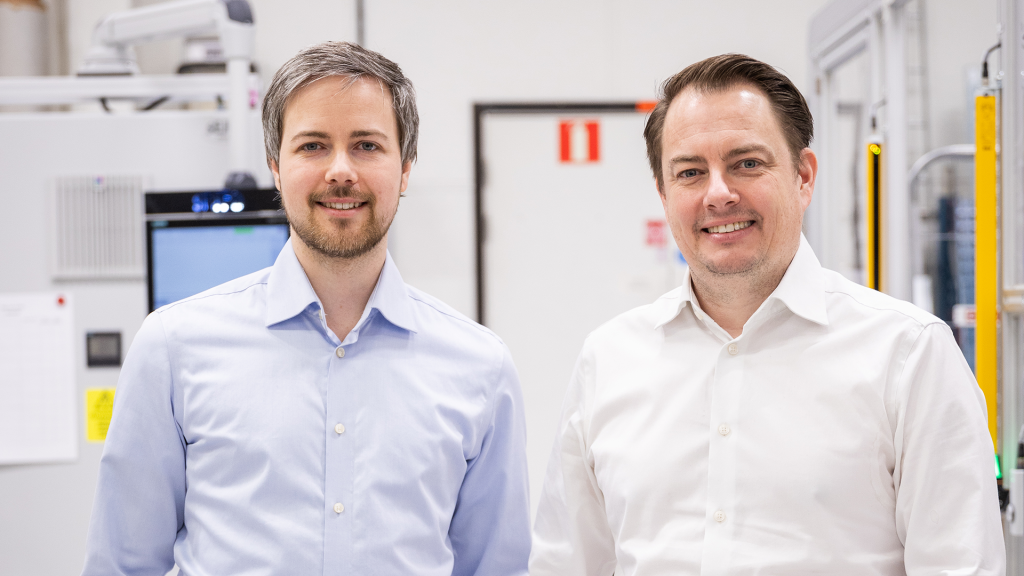
Erik Andersen, Technical Sales / Concept Developer at SEJFO Group
Similarly, Konecranes Agilon needed a better way to explain highly configurable intralogistics solutions where every customer environment is unique. Vaisala needed confidence that a major logistics centre investment would perform as expected before construction began. Pivatic needed to validate increasingly sophisticated machine control software before commissioning started.
Different industries. Different challenges. The same underlying problem: making critical decisions about systems that do not yet exist.
The new competitive advantage is shared understanding
One of the most significant changes in manufacturing simulation is who benefits from it. Historically, simulation was created for engineers. Today, its value extends to sales teams, project managers, operations leaders, software developers, customers and executive decision-makers. The reason is simple. People make better decisions when they can see the same reality.
Simulation provides a common visual language that aligns stakeholders around a shared understanding of how a process, factory, or production system will actually work. Instead of reviewing specifications, stakeholders can experience operations before they exist physically.
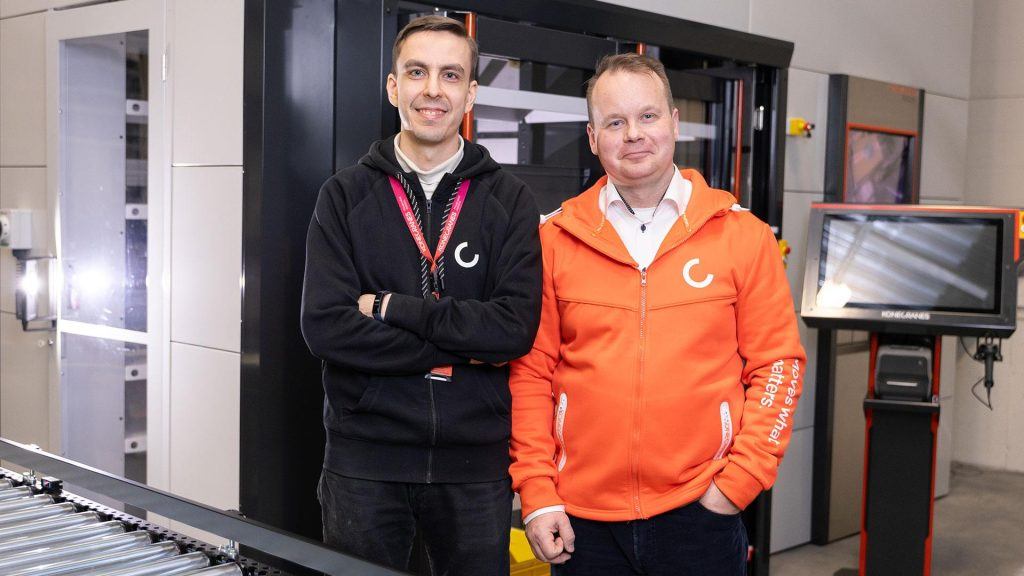
For Konecranes Agilon, simulation has become a way to connect customer requirements with solution design.
“From the beginning, we talk about the same ideas, same concepts. Both of us, our customer and us, we understand that here is how it works. Here is the process.”
Teemu Oittinen, Director of Solutions Engineering at Konecranes Agilon
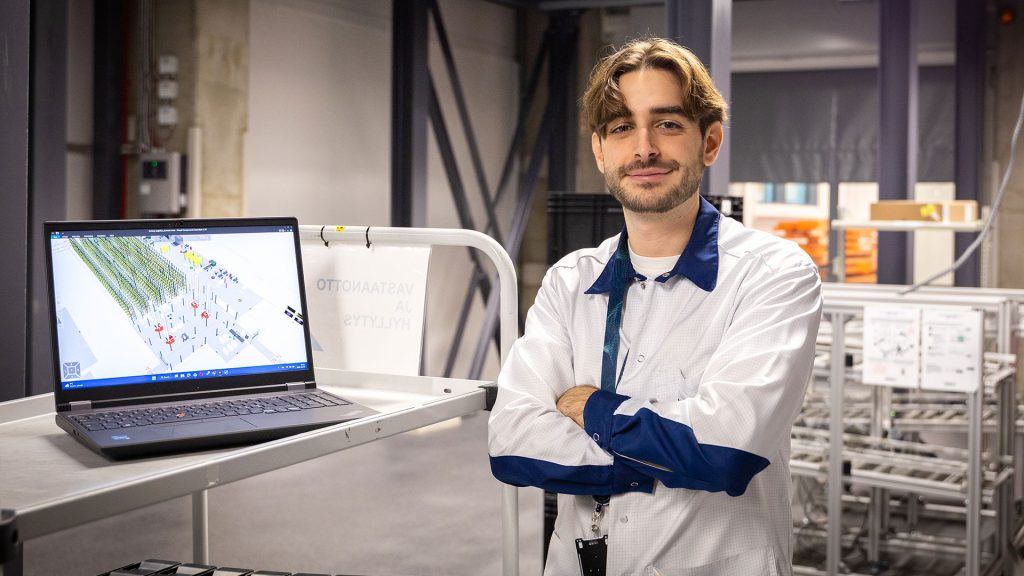
At Vaisala, simulation became a communication platform between engineering, operations, and management.
“Five minutes in the simulation replaced twenty minutes of explanations.”
Lorenzo Riggi, Senior Automation Engineer at Vaisala
In many cases, the greatest value of simulation is not technical. It is organizational. It reduces ambiguity, accelerates alignment and helps teams move forward with confidence.
Manufacturing is moving from assumptions to evidence
Another major shift is how manufacturers evaluate risk. Traditionally, many decisions relied on engineering expertise, calculations and experience. While these remain important, companies increasingly want evidence before committing to investments, schedules and implementation plans.
Modern 3D manufacturing simulation allows teams to evaluate throughput, cycle times, resource utilization, bottlenecks, material flows and future capacity scenarios before equipment is purchased or installed.
At SEJFO Group, simulation improved confidence in everything from robot selection to layout decisions and safety considerations.
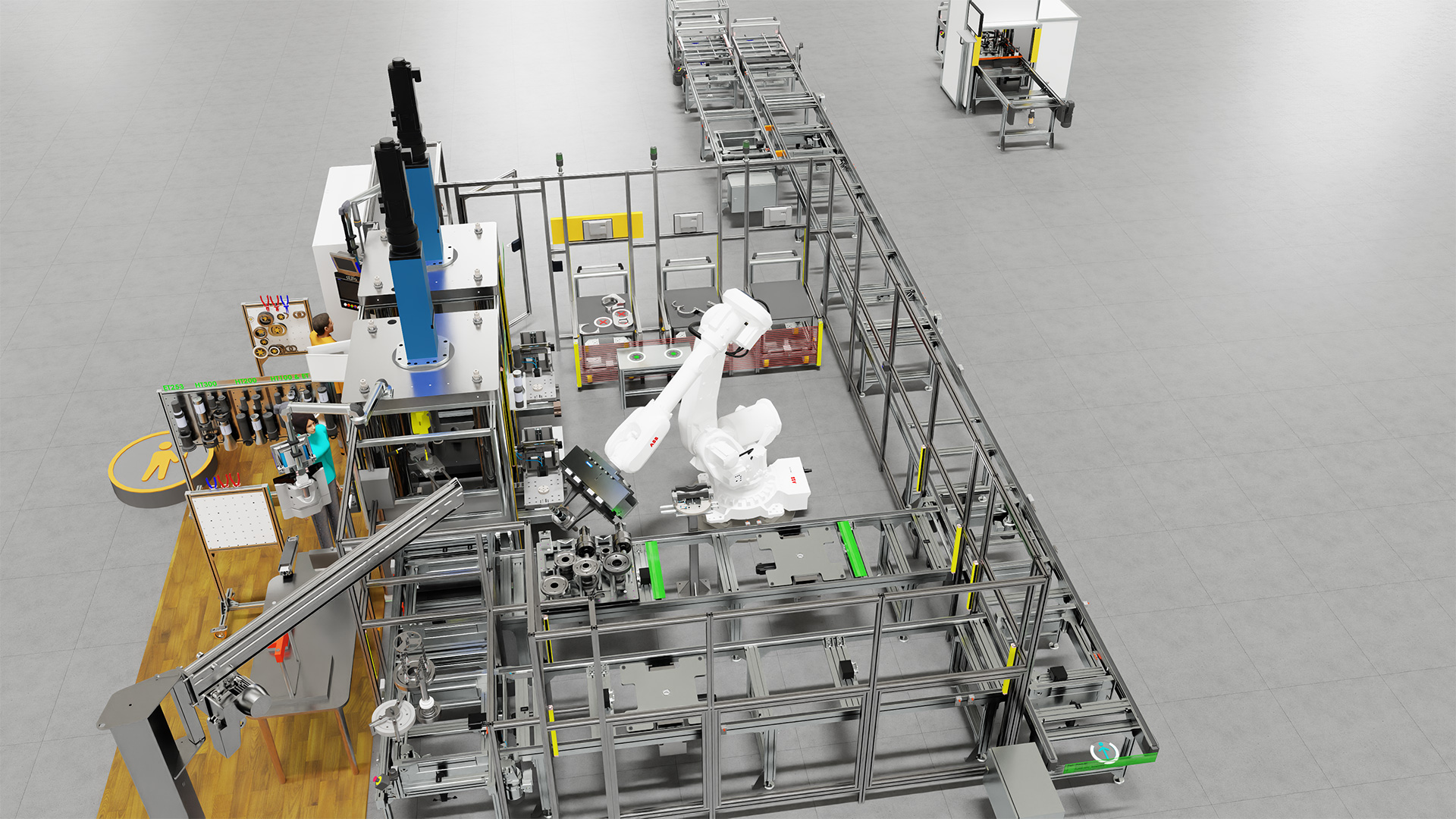
“Before we could guess. We guessed a lot more. Now we investigate more so we get safer deliveries.”
Karl Ingström, Director of Sales at SEJFO Group
At Vaisala, simulation revealed potential operator workload imbalances and future AGV capacity constraints before construction started. Issues that would have been expensive to address later could be solved while they still existed only in a digital environment.
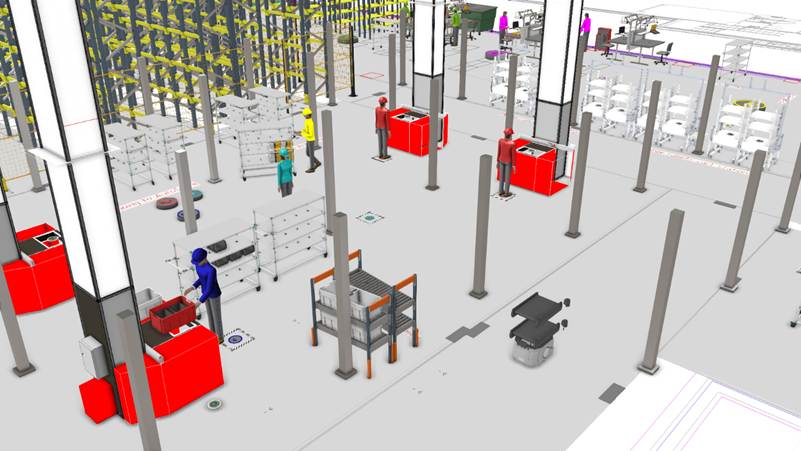
This reflects a broader manufacturing trend. The most successful companies are increasingly replacing assumption-based planning with evidence-based decision-making.
Why simulation is becoming part of the sales process
Perhaps the clearest sign that simulation has become a business capability is its growing impact on sales. Manufacturers are no longer buying machines alone. They are investing in business outcomes, productivity gains, operational improvements and future flexibility. As a result, suppliers must communicate value more clearly and reduce uncertainty earlier in the buying process. Simulation helps achieve exactly that.
At SEJFO Group, realistic simulations increased customer confidence and even helped customers build internal support for projects.
“We have gotten some specific deals just because we were able to visualize them better.”
Erik Andersen, Technical Sales / Concept Developer at SEJFO Group
At Konecranes Agilon, simulation has helped reduce sales cycle length by at least two times. Customers gain confidence faster because they can see how the proposed solution will operate within their own environment.
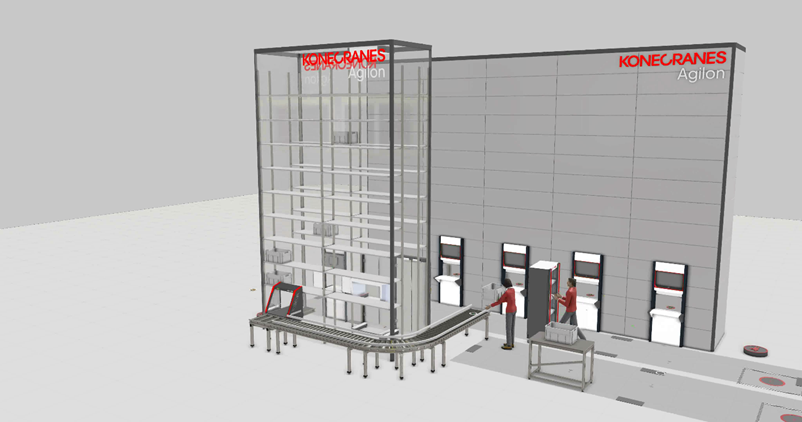
“When the customer understands our process, they are more willing to make that purchasing decision.”
Teemu Oittinen, Director of Solutions Engineering at Konecranes Agilon
This represents a fundamental change in industrial selling. Visualization is no longer a nice addition to a proposal. It is becoming a strategic differentiator.
Virtual commissioning is moving validation upstream
If simulation is transforming decision-making, virtual commissioning is transforming execution.
Rather than waiting until equipment is installed to test software and control logic, manufacturers can connect real PLC programs and automation systems to digital models and validate behavior before hardware is available. This allows mechanical, electrical and software teams to work in parallel rather than sequentially, reducing risk and accelerating delivery.
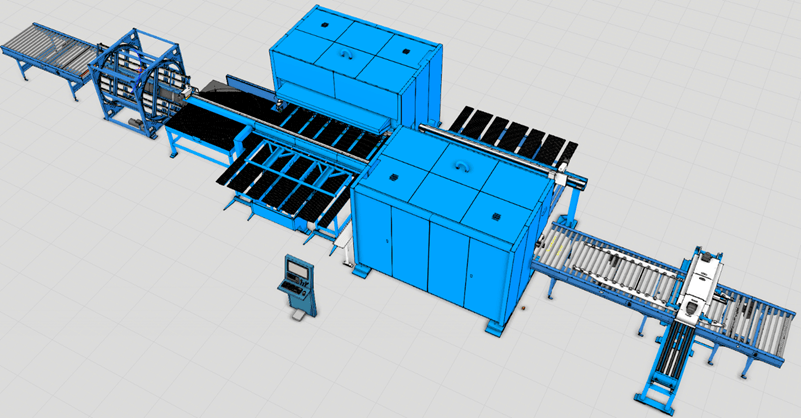
Pivatic demonstrates this transition especially well.
“Using simulation, we can test our actual control software and iron out problems before the line is built.”
Mika Virtanen, Technical Director, Pivatic, Vaski Group
The impact is measurable.
“We’ve been able to speed up commissioning time by 2 to 3 weeks.”
Juha Tusa, Automation Engineer, Pivatic, Vaski Group
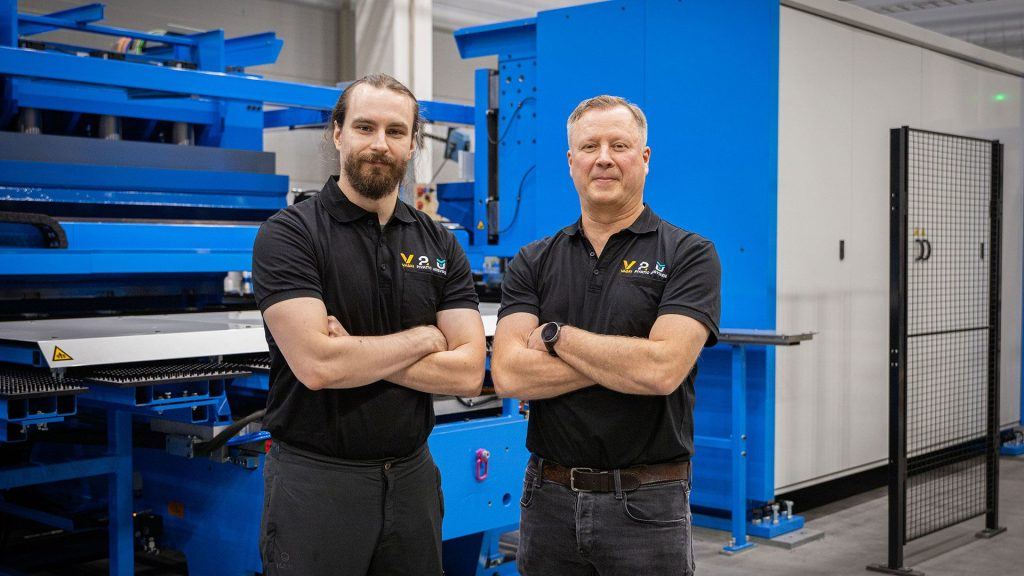
What was once considered an advanced engineering practice is increasingly becoming a standard part of modern automation projects.
From project models to long-term business assets
Another important trend is redefining the value of simulation after a project is delivered. Traditionally, simulation models were used during design and then archived. Increasingly, companies are continuing to use these models as digital twins that support future improvements and operational decision-making.
At Vaisala, the logistics centre model continues to support capacity planning, operational analysis, and future development initiatives.
“Now I have my simulation of the logistics center and I have the data of every process.”
Lorenzo Riggi, Senior Automation Engineer at Vaisala
Likewise, Pivatic uses simulation to evaluate performance improvements even after systems have been deployed. According to Mika Virtanen, production improvements of 10-20% can be identified through virtual testing before changes are implemented.
This marks another important evolution. Simulation is no longer supporting a single project phase. It is becoming part of the operational infrastructure that drives continuous improvement throughout the lifecycle of a manufacturing system.
The future belongs to manufacturers that can test before they invest
The stories of SEJFO Group, Konecranes Agilon, Vaisala and Pivatic point to a larger industry shift. Simulation and virtual commissioning are no longer defined by what they do technically. They are defined by the business outcomes they enable.
Organizations are using them to build confidence, align stakeholders, reduce risk, accelerate sales, shorten commissioning and continuously improve performance. What started as an engineering capability is rapidly becoming a strategic business capability.
As manufacturing systems become more complex and the cost of poor decisions continues to rise, the ability to explore, validate and optimize ideas in a virtual environment before acting in the physical world will become less of a competitive advantage and more of a business requirement. The manufacturers that embrace this shift will move faster, make better decisions and bring their concepts to reality with greater confidence.
Frequently asked questions
Visual Components covers all five core simulation modules — Layout Planning, Material Flow, OLP, PLC Validation, and Virtual Commissioning — in one platform and one interface. Most competitors cover two to three of these modules.
Annual subscription pricing ranges from approximately €5,000 for lower-cost alternatives to €22,000+ for enterprise platforms. Visual Components Premium simulation is €13,000/year. Robot offline programming is sold as a separate product line (Premium OLP) at a higher price point — if OLP is in scope, factor it into the total. Costs increase with add-on modules and additional licenses for most platforms.
It depends on what you mean by “support.” Visual Components ships with 2,350+ robot models ready to simulate. For offline programming (OLP), Visual Components supports 22+ robot brands with verified post-processors — ask for the latest list, as it grows over time. Some enterprise platforms also support extensive robot libraries.
Both cover the full five-module scope. Visual Components is approximately €9,000/year less expensive at comparable feature levels, does not require additional product dependencies, and is the only option offering OEM/whitelabeling. Enterprise platforms have deeper PLM integration and longer-established use in automotive manufacturing.
Visual Components covers both modules natively. Some enterprise platforms also support both, though they typically require additional product dependencies and cost significantly more.
Only 6 of the 14 tools analyzed offer trial licenses. Visual Components offers a 30-day trial. Free self-paced learning is also available at the Visual Components Academy, independent of a paid trial.
PLC validation checks that your PLC logic is correct — does the conveyor stop when the sensor triggers, does the robot wait for the right signal. Virtual commissioning goes further: it validates the complete automation system (robot programs, PLC logic, control sequences, and signal flows) against a digital twin before physical commissioning begins. PLC validation tells you whether the logic works; virtual commissioning tells you whether the whole system works together.
Visual Components. With 2,350+ robot models ready to simulate and 22+ brands supported for OLP, brand-neutral programming, and AMR simulation, it is built for production environments where multiple robot manufacturers are in use.
Further reading
Introducing Arc OLP: From workpiece to robot program. Faster.
Arc OLP brings automatic weld detection, visual selection and editing, and automatic robot program generation into one focused workflow for arc welding. Prepare new jobs offline and use the same...
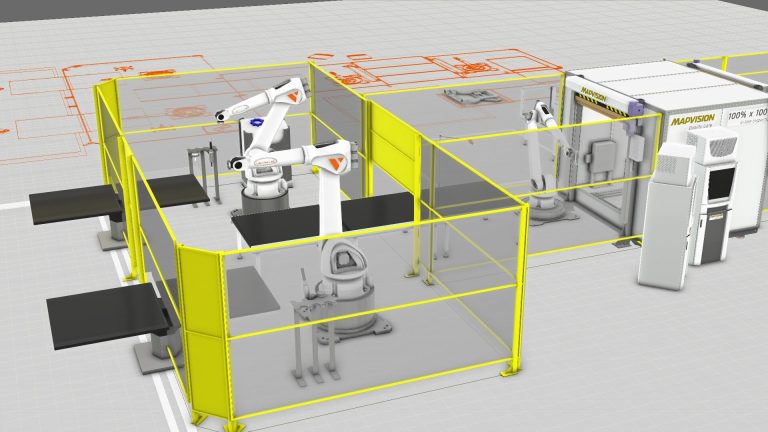
Robot workcell design: test the layout before you build
Plan robot workcells in 3D. Compare layouts, check robot reach and motion, and test production flow before installation with Visual Components.
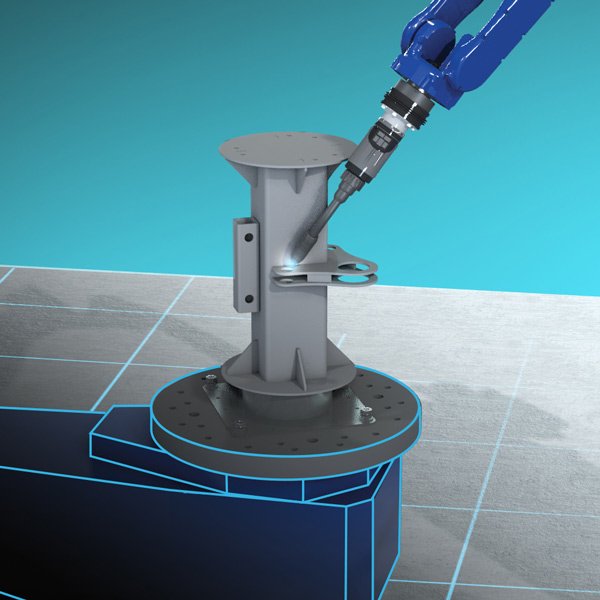
Robotic welding: plan, simulate, and program the complete cell offline
Plan robotic welding cells, check reach and collisions, and prepare robot programs offline with Visual Components OLP. See how the workflow fits your cell.