Introducing Arc OLP: From workpiece to robot program. Faster.
Arc OLP brings automatic weld detection, visual selection and editing, and automatic robot program generation into one focused workflow for arc welding. Prepare new jobs offline and use the same programming approach with any robot brand.
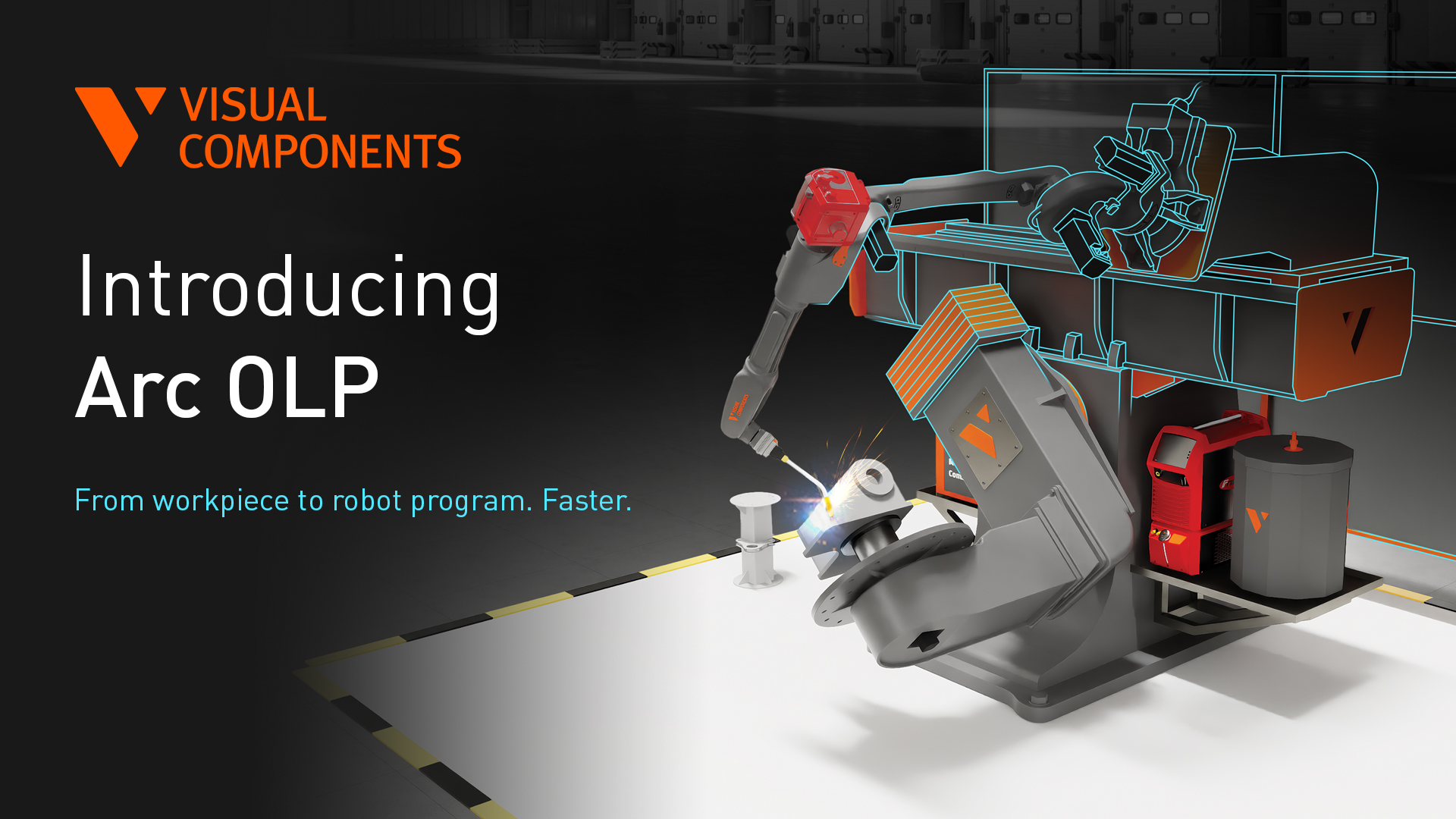
Arc OLP is a new product released alongside Visual Components 5.2. To purchase a license, please contact us.
Every new welded product or design change creates work before production can begin. Welding specialists need to program robots quickly and reliably. Production managers need the next job ready while the cell keeps producing. System integrators need a programming solution that helps customers use their welding automation efficiently.
Visual Components introduces Arc OLP, an offline programming solution built specifically for arc welding. It brings automatic weld detection, visual selection and editing, and automatic robot program generation into one focused workflow. The goal is simple: spend less time on repetitive programming and more time preparing welded products for production.
Offline programming (OLP) means preparing and checking robot programs in a virtual environment instead of teaching every point at the production robot. Arc OLP combines Auto Weld for automatic weld detection with Guided Workflow for automating the entire robot programming workflow, from weld detection to program generation and post-processing.
Arc OLP is designed for manufacturers, system integrators, and robot OEMs working with robotic arc welding. It’s particularly relevant to high-mix, low-volume production, where frequent variants and many weld seams create repeated programming work. It also gives small and medium-sized manufacturers a focused entry into offline programming for their welding cells.
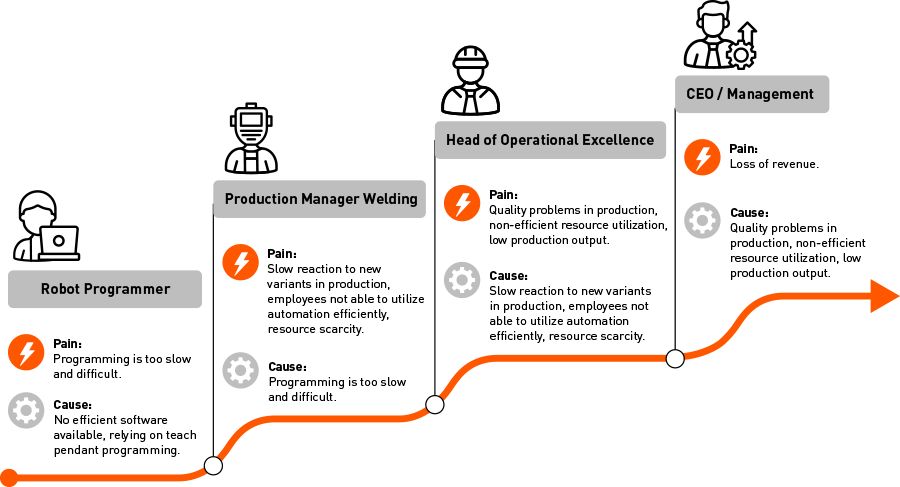
Who benefits from Arc OLP?
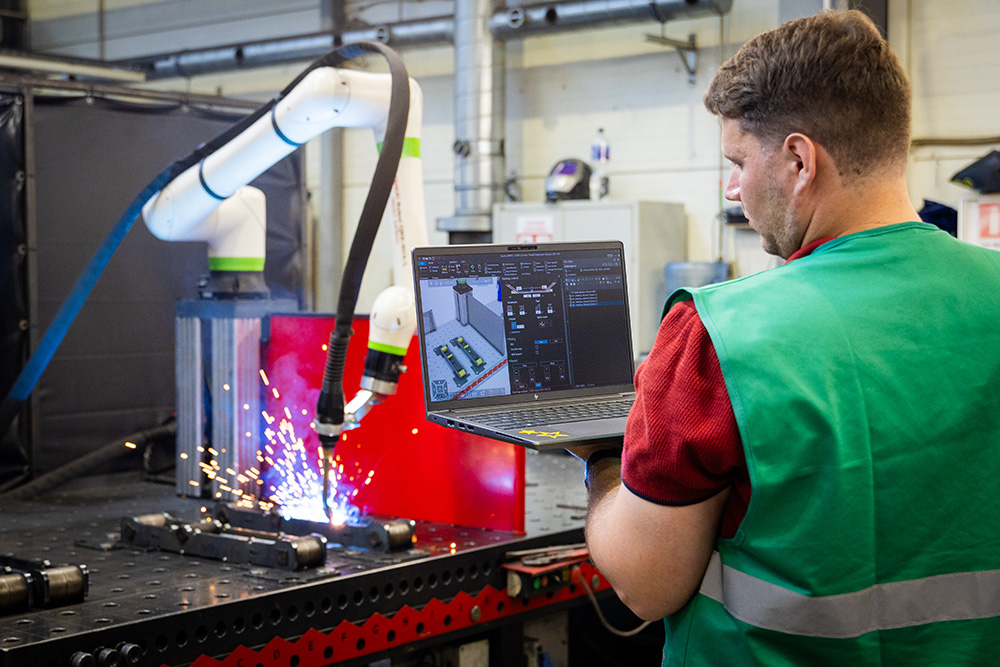
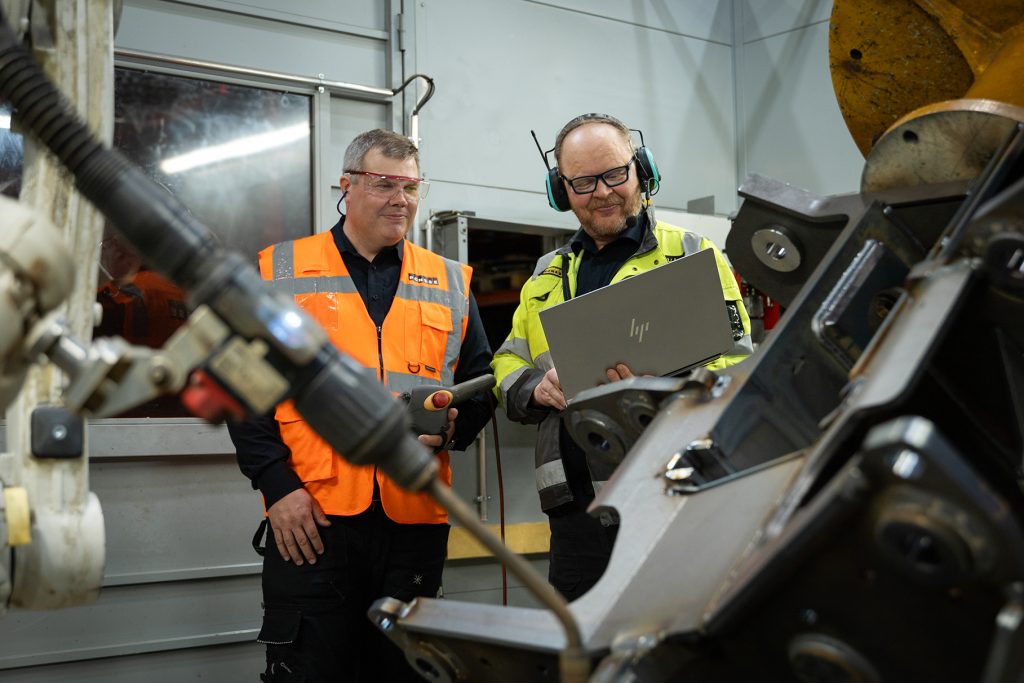
Automate repetitive seam definition and robot program generation. They select and refine welds, review the generated program, and apply their expertise to weld requirements, procedures, and quality standards.
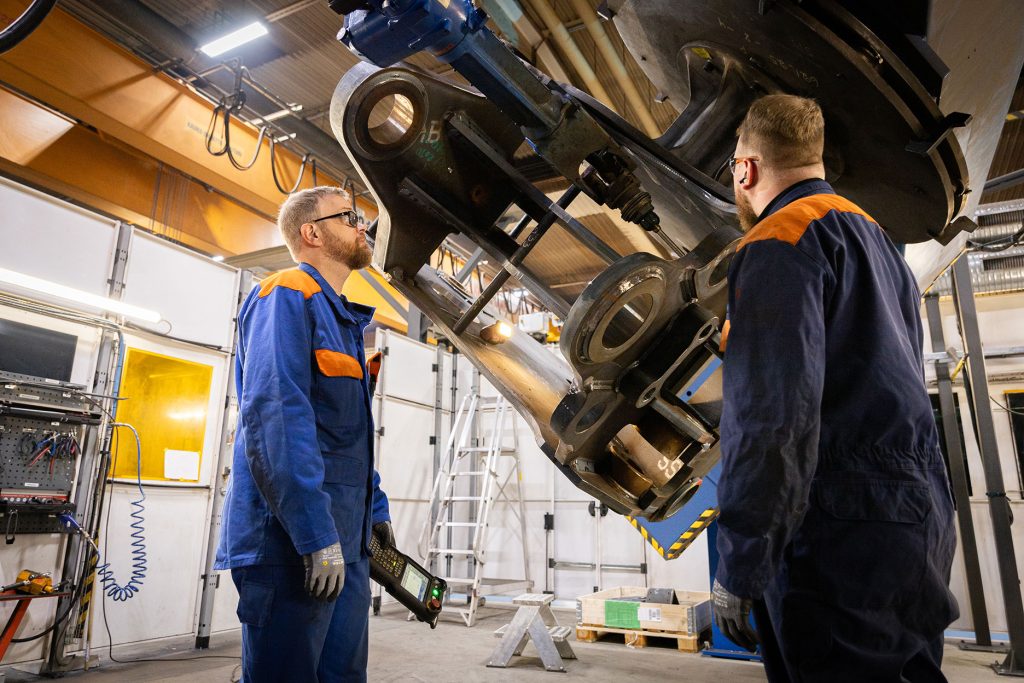
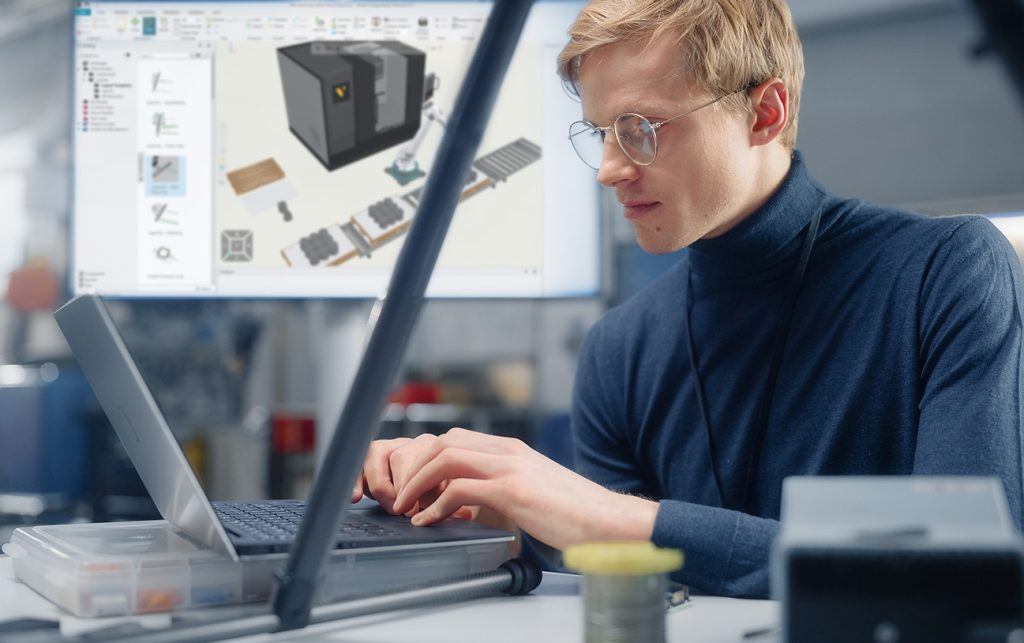
Prepare the next job offline while the cell produces. Less programming downtime and fewer shop-floor corrections help them manage schedules and preparation costs.
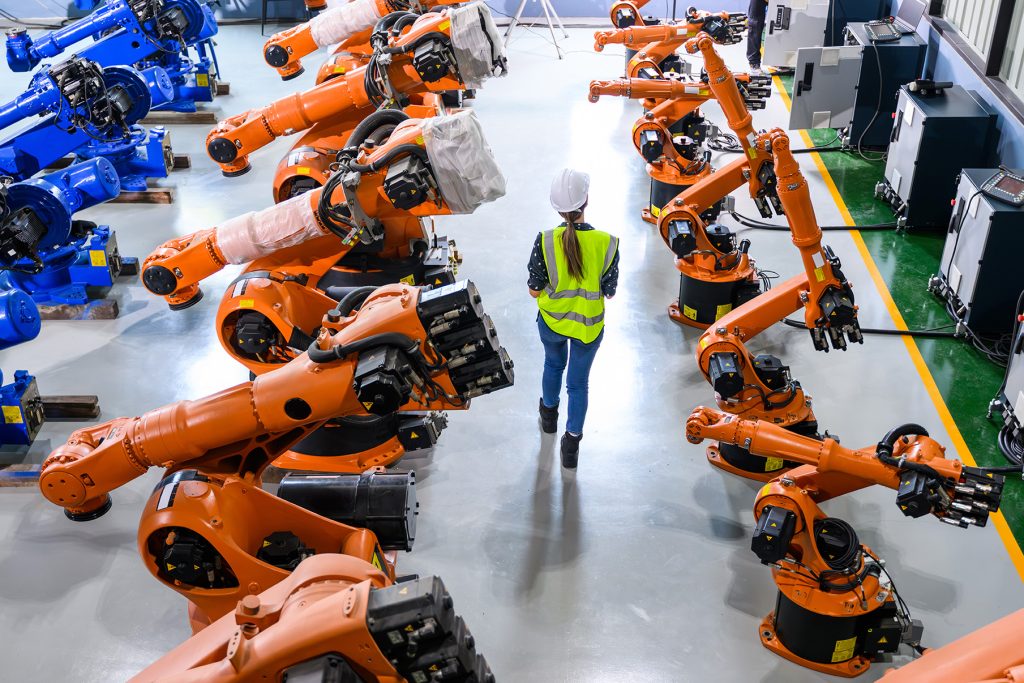
Expand robotic welding without increasing programming resources at the same rate. Lower preparation costs, better use of existing cells, and predictable pricing support their return-on-investment goals.
Include a focused offline programming solution in their welding automation offering, helping customers prepare new jobs and adapt programs as products change.
Offer customers an arc-welding solution that combines automatic weld detection and robot program generation in one guided workflow.
Automatically detect welds with Auto Weld
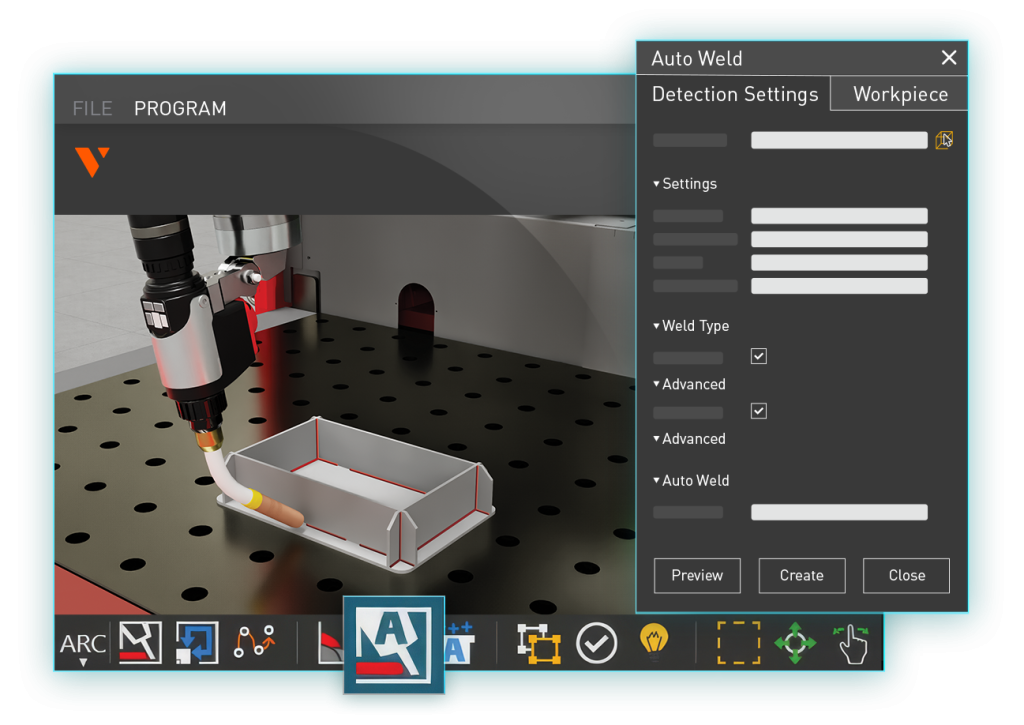
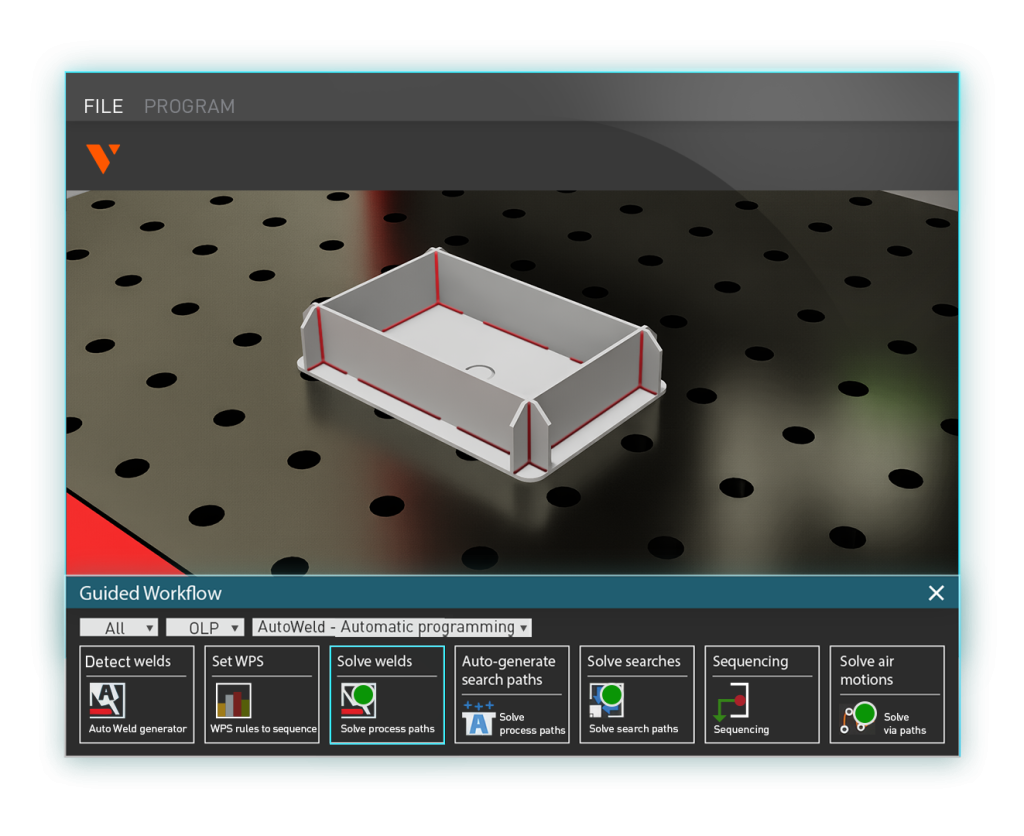
Defining seams one by one takes time, especially when a part has many similar joints. Auto Weld automatically identifies weld opportunities from part geometry, helping you move from CAD data to robot programming faster.
Auto Weld applies built-in welding intelligence to identify realistic weld opportunities rather than treating every edge as a weld. This eliminates repetitive manual seam-definition steps and lets specialists focus on the decisions that need their expertise.
You review the detected seams directly on the 3D part and select the ones needed for the job. If only some joints belong in the current operation, select those and leave the others out. Then refine the selected welds and adjust their sequence before continuing to automatic robot program generation.
Automatic detection supports the specialist’s work. Weld requirements, procedures, and quality standards still guide which welds belong in the program and how to prepare them.
Automate the robot programming workflow with Guided Workflow
Guided Workflow automates the entire robot programming workflow, from weld detection to robot program generation and post-processing. It connects the steps in one sequence: detect welds, review and select the required seams, edit and sequence them, then automatically generate the robot program and post-process it for the target controller.
Automatic path solving is part of this process. Solver resolves robot motion problems involving reachability, configurations, and joint limits within the modeled cell. Your team reviews the generated program and makes any necessary adjustments. Post-processing then converts the prepared program into output for the target robot controller.
The result is a clear route from workpiece geometry to a robot program. Specialists spend less time on repetitive programming tasks and more time refining the welds and reviewing the output.
An accurate model of the robot, torch, workpiece, and fixture supports offline validation. Calibration and final checks on the physical cell remain part of putting the program into production.
Prepare the next job as you weld
Programming effort affects more than engineering hours. Waiting for access to a robot and correcting programs on the shop floor also add to the cost of introducing a new part. For short production runs, that preparation cost can determine whether a job makes sense to automate.
Arc OLP lets your team generate, validate, and revise robot programs offline while the production cell keeps welding. When a design changes, specialists edit the welds, regenerate the program, and check it in the virtual cell before moving to the physical system.
For production managers, this means planning program preparation alongside production rather than stopping the cell to teach the next job. Eliminating repetitive manual programming steps helps shorten preparation cycles and leaves more time for production.
With Arc OLP, you can create and modify programs without weld quotas or extra usage charges, giving your team the flexibility to adapt as products change. Predictable pricing and optional on-premises deployment provide a setup that scales with your needs.
Grow across robot brands with one approach
Adding welding automation shouldn’t mean multiplying programming tools and training needs. Arc OLP provides one workflow for arc-welding programming with any robot brand.
Specialists follow the same approach to detecting, selecting, and editing welds and generating robot programs as the business introduces new products or expands production automation. Teams can unify their programming methods instead of building a separate workflow around each brand.
For manufacturing leaders, the value is practical: expand automation without increasing programming effort at the same rate. A common workflow helps teams reuse their knowledge and manage the cost of preparing new products for robotic welding.
Arc OLP focuses on arc welding. If your requirements extend beyond arc welding, the broader Visual Components OLP portfolio supports automation across a wider range of industrial processes.
See Arc OLP in action
Start with a part, fixture details, and your target robot and controller. See how Auto Weld identifies weld opportunities, then follow Guided Workflow from detection and selection through automatic robot program generation and post-processing.
Use the demonstration to see how Arc OLP automates repetitive programming tasks for specialists, helps reduce production disruption, and supports a common workflow across robot brands.
From workpiece to robot program. Faster.
Further reading
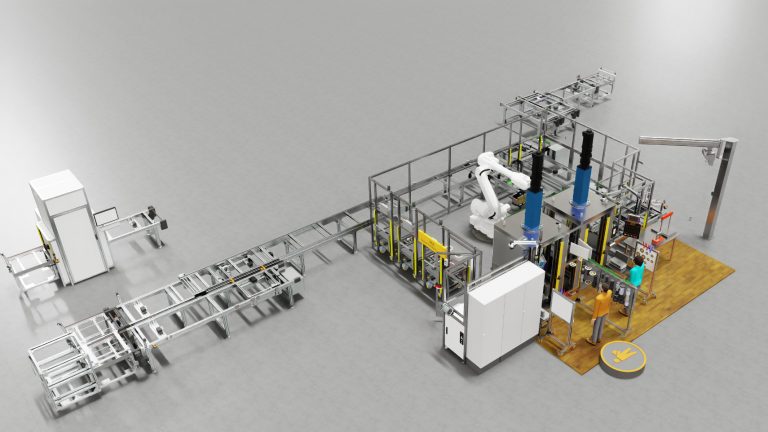
Beyond engineering: why 3D simulation is becoming a core business capability in manufacturing
Simulation is evolving beyond engineering. Explore how manufacturers use 3D simulation and virtual commissioning to improve sales, reduce risk, validate investments and optimize operations throughout the production lifecycle. Learn from...
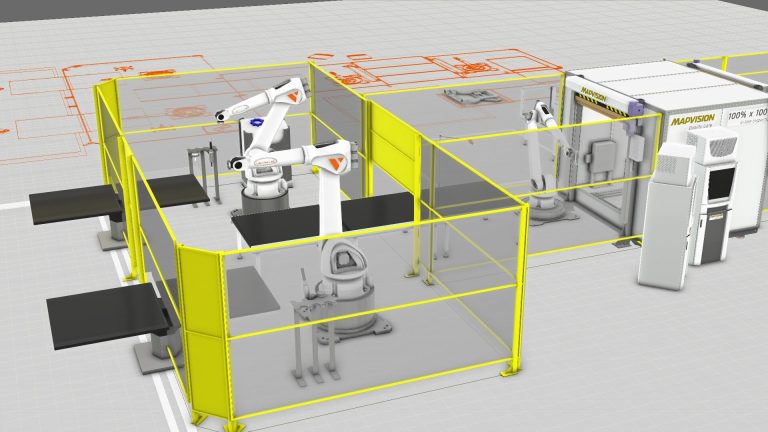
Robot workcell design: test the layout before you build
Plan robot workcells in 3D. Compare layouts, check robot reach and motion, and test production flow before installation with Visual Components.
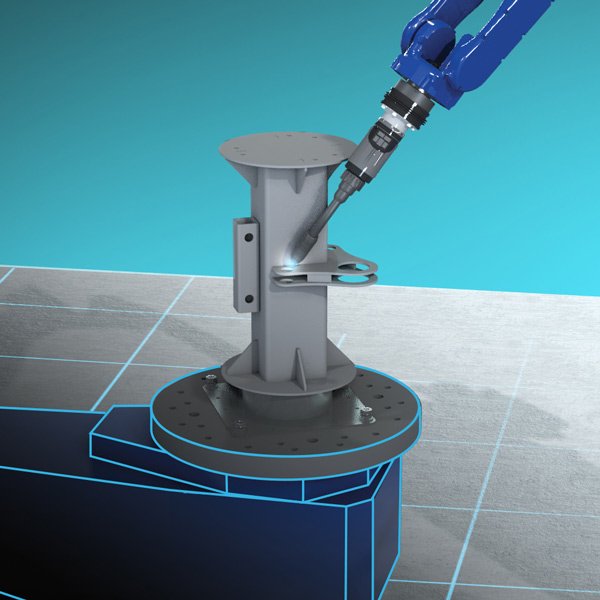
Robotic welding: plan, simulate, and program the complete cell offline
Plan robotic welding cells, check reach and collisions, and prepare robot programs offline with Visual Components OLP. See how the workflow fits your cell.