Konecranes Agilon uses Visual Components to accelerate solution sales with clear, visual manufacturing simulation
Konecranes Agilon uses Visual Components to transform how it sells complex, configurable intralogistics solutions. By visualizing customer layouts, material flows, and automation scenarios through manufacturing simulation, Agilon creates shared understanding, shortens sales cycles, and helps customers see exactly how solutions fit their real‑world processes, turning complexity into confident purchasing decisions.
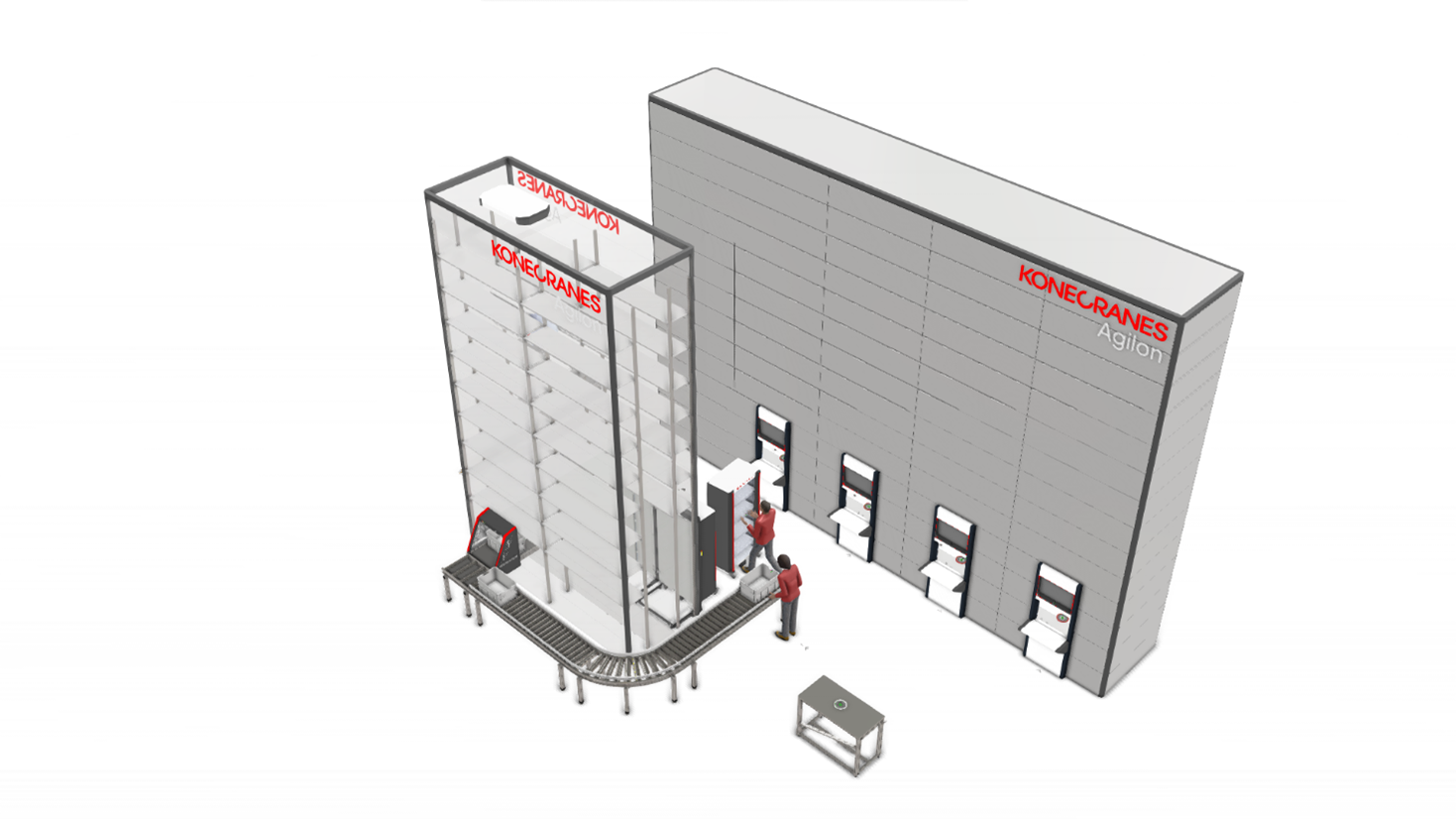
Selling complex, configurable intralogistics solutions
Konecranes Agilon provides automated intralogistics solutions designed to support modern warehousing and manufacturing operations. Each solution is highly configurable and tailored to the customer’s specific layout, material flows, and operational requirements. While this flexibility allows Konecranes Agilon to deliver strong customer value, it also introduces complexity into the sales process.
No two customer projects are the same. Each sales engagement involves different constraints, layouts, throughput requirements, and operational priorities. As a result, selling Agilon solutions is about designing and communicating a solution that fits a unique customer process. Instead of focusing primarily on what happens inside the automated system, sales discussions increasingly center on how the customer’s overall process works end to end, and how the solution improves it.
“We want to position ourselves as a solution provider, not a product seller. After we have understood the customer process, we need to convey and tell the customer this is how we understand your process. And this is where we use Visual Components.”
Teemu Oittinen, Director of Solutions Engineering at Konecranes Agilon
The challenge of explaining complex solutions in a customer context
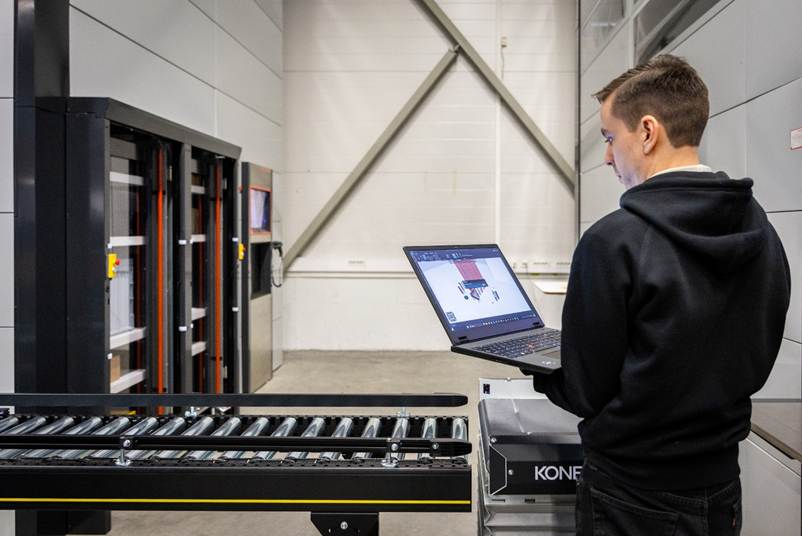
In solution selling, alignment around the customer process is critical. Before discussing performance improvements or system configurations, both sides need to share a common understanding of how the current process works and what the future process should look like.
Historically, Konecranes Agilon relied on static sales materials such as images, tables, and product documentation. While these tools were effective at describing individual components, they made it difficult to communicate how a full solution would function within a customer’s actual operational environment. Discussions could easily drift into abstractions, with different stakeholders visualizing the process in different ways.
Manufacturing simulation changed this dynamic.
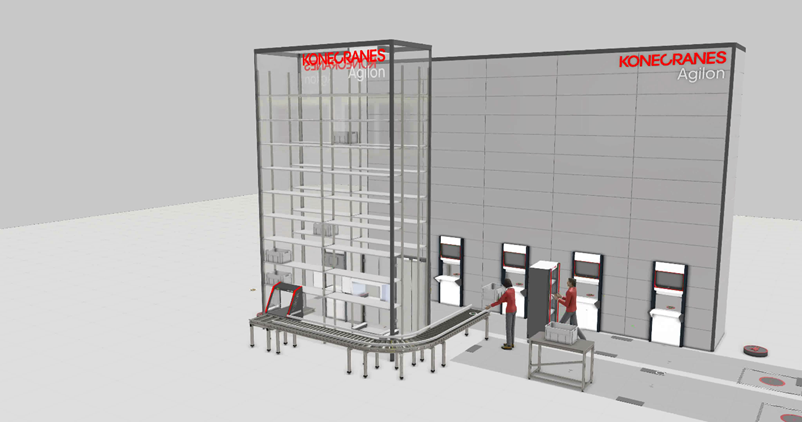
By using Visual Components to model customer layouts, material flows, and their automated intralogistics solutions directly in that customer’s layout, Konecranes Agilon is able to create a shared visual reference from the very beginning of the sales discussion. Instead of describing the process verbally, sales teams can show it, ensuring that everyone is literally looking at the same thing.
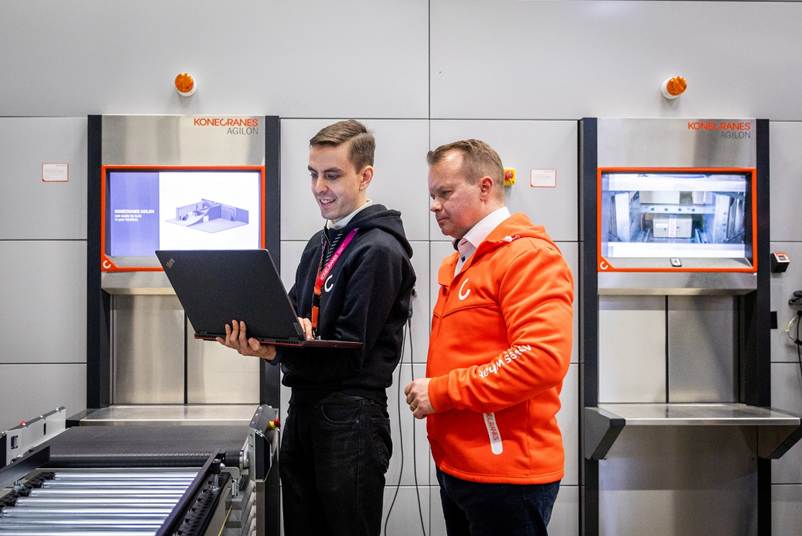
“From the beginning, we talk about the same ideas, same concepts. Both of us, our customer and us, we understand that here is how it works. Here is the process.”
Teemu Oittinen, Director of Solutions Engineering at Konecranes Agilon
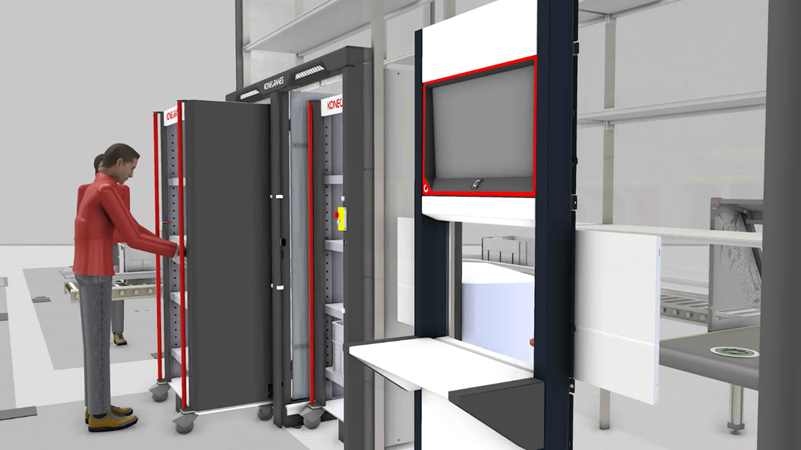
This shared understanding reduces misalignment early in the sales cycle and creates a strong foundation for solution‑focused discussions.
Demonstrating configurability and fit in real customer environments
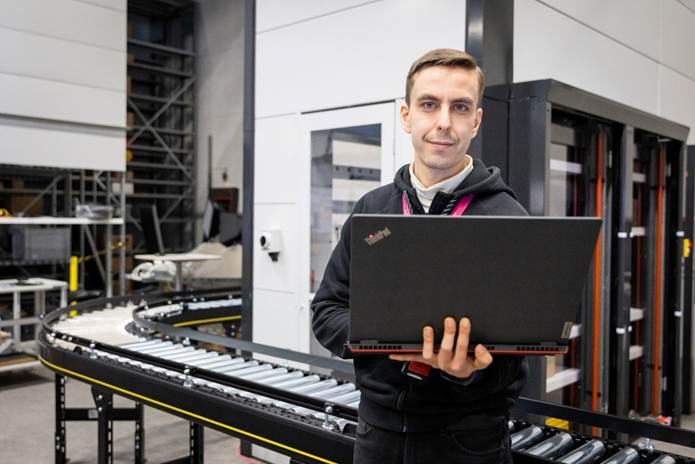
Configurability is one of the defining characteristics of Agilon solutions. Like mentioned earlier, no two projects are the same. Every project requires adjustments to dimensions, capacities, layouts, and operating parameters. Communicating this flexibility clearly is essential for helping customers understand how the solution will fit their specific environment. They can adjust heights, widths, quantities, and configurations to match real‑world constraints, thanks to Visual Components’ modelling features, creating a realistic representation of the proposed system.
“When we use Visual Components to present the solutions to the customers, we’re able to configure it, different heights, different sizes, how many units do we put together, and usually in Visual Components we can configure it to be exactly the size right for the layout.”
Ville Julku, Production Development Engineer, Konecranes Agilon explains.
This level of realism helps customers move beyond abstract descriptions and see how the solution would operate in practice. It also makes it easier to identify potential issues early and address them collaboratively during the sales process.
By showing how a solution fits into the customer’s actual space and workflow, Visual Components helps turn configurability from a source of complexity into a source of confidence.
Making improvements visible through scenario comparison
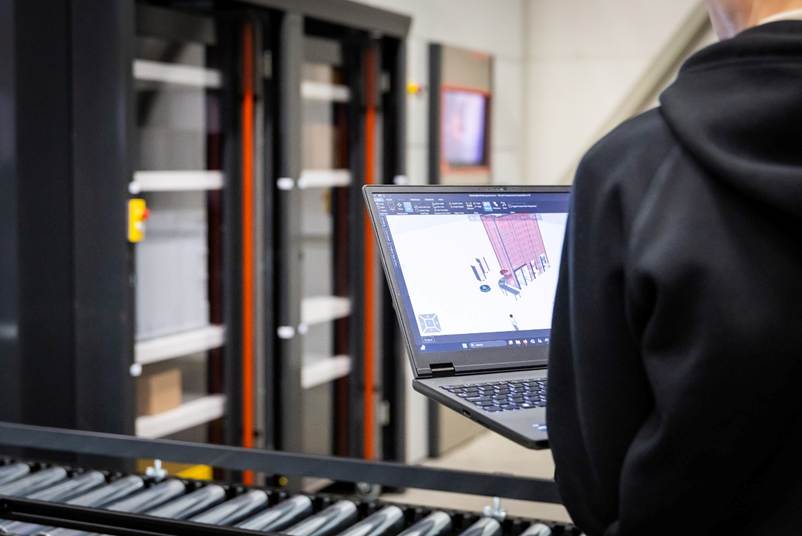
Another key value of manufacturing simulation is the ability to compare different scenarios within the same model. For complex automation projects, customers often want to understand not only the proposed solution, but also how it compares to existing processes or alternative approaches.
Visual Components allows Konecranes Agilon to present multiple scenarios side by side. Sales teams can show how a process works today, demonstrate more traditional solutions, and then introduce the Agilon solution to highlight what changes and why it matters.
“I’m able to just present multiple different transport solutions for different products in the same layout… this is the traditional way, this is how we’re doing it now, and then… this is how we would do it.”
Ville Julku, Production Development Engineer, Konecranes Agilon explains.
By visualizing differences in material flow, space utilization, and operational behavior, simulation makes improvements tangible. Customers can clearly see what is gained and how those gains are achieved, which makes evaluation and comparison easier.
This approach shifts discussions away from theoretical claims and toward visible, process‑level improvements.
Faster decisions through clearer communication
One of the most significant benefits of using Visual Components has been faster customer decision‑making.
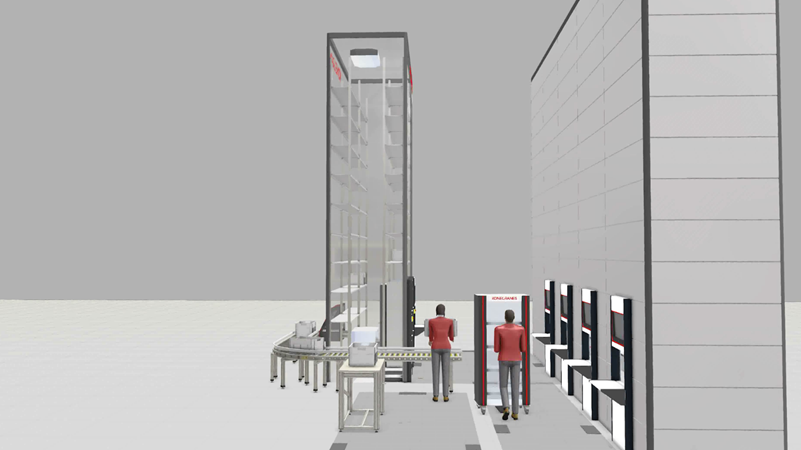
“The real value of using Visual Components is that we actually can present our solutions much more clearly for our customers,” Teemu says. “When the customer understands our process, they are more willing to make that purchasing decision.”
By visualizing how materials flow through the system, how operators interact with it, and how performance changes across scenarios, customers gain confidence in what they are buying. “They care how the operator will act on the system. What is the speed? How fast you can input? How fast you can take out items from the system?”
This clarity has had a measurable impact on sales efficiency. “Visual Components improve customer confidence. We can clearly show what we are offering,”.
As a result, Konecranes Agilon has significantly shortened its sales cycles. “We have reduced our sales cycle by at least two times,” Teemu notes.
Simulation as an expected part of the buying process
Customer expectations continue to evolve, and simulation is increasingly seen as a standard part of evaluating automation solutions.
“Our customers are expecting that they will see clear visualizations. They are expecting animations. They are also expecting simulations as part of the purchasing process,” the team explains.
For Konecranes Agilon, Visual Components plays a key role in meeting these expectations and supporting future solution development.
“Simulation is a tool to have for any system integrator or solution provider”
Teemu Oittinen, Director of Solutions Engineering at Konecranes Agilon
Clear visualization turns complexity into confident decisions
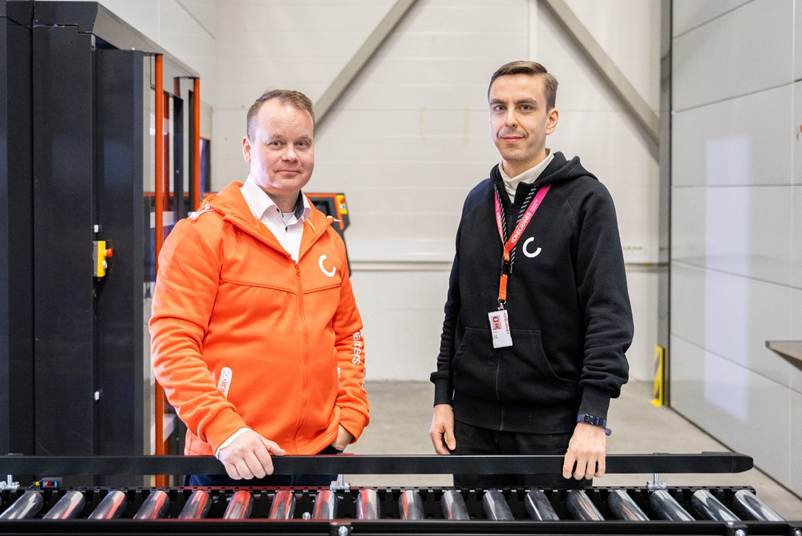
By using Visual Components as a core sales tool, Konecranes Agilon has evolved how it communicates complex solutions. Visual simulation provides a common language that aligns internal teams and customers around the same process view from the very beginning.
“Visual Components is a great sales tool,” Teemu summarizes. “It’s easy for use for the sales team, and we can discuss together with the customer from the correct perspective about the product, the processes, and the solution.”
When complexity becomes visible and understandable, confidence grows, and sales move faster.
About Visual Components
Founded by a team of simulation experts and amassing over 20 years in business, Visual Components is one of the pioneers of the 3D manufacturing simulation industry. The organization is a trusted technology partner to a number of leading brands, offering machine builders, system integrators and manufacturers a simple, quick and cost-effective solution to design and simulate production processes and offline robot programming (OLP) technology for fast, accurate and error-free programming of industrial robots.
Want to learn more about the benefits of our solutions for your business? Contact us today!
Further reading
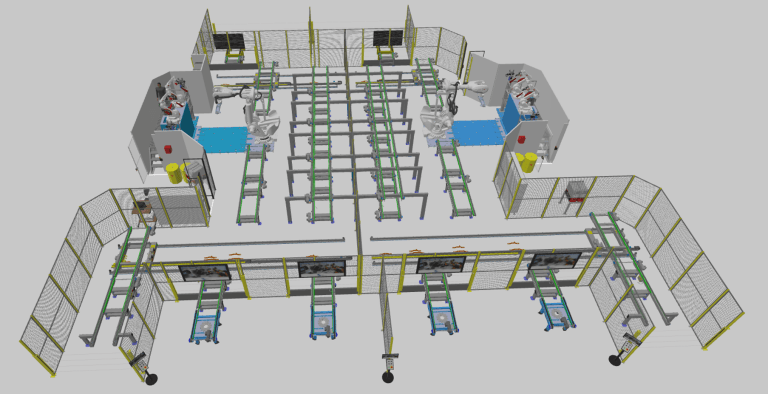
MSK Finland advances robot cell automation and intralogistics planning with Visual Components offline programming and manufacturing simulation
MSK Finland increases efficiency in both robot cell automation and intralogistics planning using Visual Components robot offline programming (OLP) and manufacturing simulation software. By creating and validating robot programs virtually,...
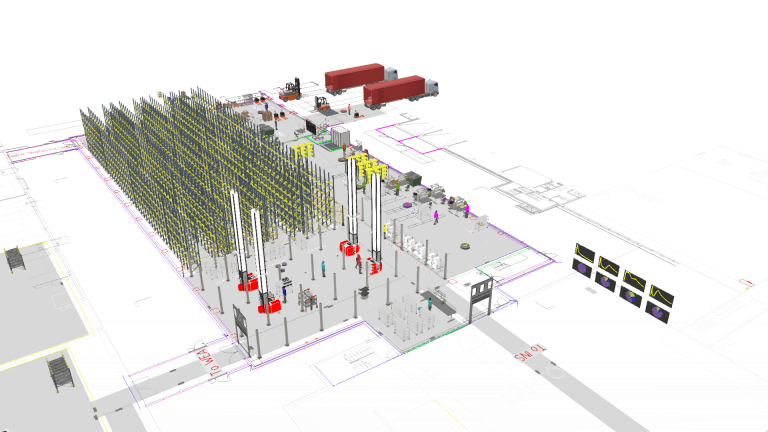
Vaisala optimized and validated its new logistics center with Visual Components
Vaisala recently built a new logistics center at its Vantaa headquarters to support growing production needs. Using Visual Components’ 3D simulation platform, the automation team modeled the entire facility to...
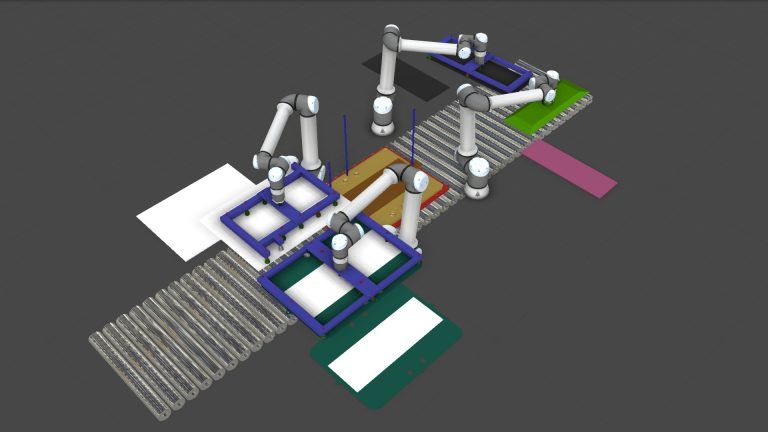
How ECOSPHERE helped JenaBatteries automate redox flow battery production with Visual Components
If more green energy is to be generated from the sun and wind, electricity needs to be stored for dark and windless times. To meet this challenge, innovative solutions are...