Mike Strahlman on what comes next for Visual Components
As the new CEO of Visual Components, Mike Strahlman shares his vision for the future of manufacturing simulation, digital twins, and automation planning. In this interview, he explains why factories will increasingly be built virtually before they are built physically, how AI is changing decision-making, and how Visual Components plans to grow through innovation, partnerships, and customer collaboration.

Mike Strahlman sees a growing role for simulation in manufacturing. We spoke with our new CEO about the product and people he’s joining, the decisions manufacturers face before they invest in automation, and how he wants Visual Components to grow.
Building on what works
The first thing Mike noticed was how much the team has already built.
“Visual Components already has the hard part solved. The company has created a product that engineers and customers genuinely love. That’s incredibly difficult to achieve.”
Mike Strahlman, CEO at Visual Components
Mike has spent much of his career helping software businesses grow. Here, he sees an experienced team and a product with room to reach more manufacturers. He wants to build on that foundation as companies look for better ways to plan their factories and automation systems.
Testing plans before committing to them
Decisions about a factory or robot cell can be expensive to change once work begins on the shop floor. Simulation gives teams a place to test a proposed layout, compare options, and talk through the plan before committing to physical equipment. Mike puts it this way:
“Every factory will soon be built twice. First virtually, then physically.”
Mike Strahlman, CEO at Visual Components
He sees simulation becoming useful earlier in the process, when teams are still deciding what to build. He also expects advances in AI to expand what they can explore in a digital environment.
“Simulation stops being a place to validate plans. It becomes a place where decisions get made”
Mike Strahlman, CEO at Visual Components
Joining the automation conversation earlier
Mike sees Visual Components’ role before a customer buys a robot or deploys an automation cell. At that point, the customer is still working out what the system needs to do and whether the proposed approach makes sense.
Starting with simulation can help people across a project see the same plan and discuss changes while there’s still room to make them. Mike’s goal is for Visual Components to help customers move from an initial idea to a decision they feel ready to act on.
Growing with KUKA and other partners
KUKA’s support brings experience and reach in automation. Mike sees an opportunity to benefit from that relationship while Visual Components continues to work across the wider manufacturing industry.
He also points to the collaboration with NVIDIA and the launch of FactoryLens. Partnerships can help Visual Components reach more people and make it easier for teams to share and work with simulations. They connect the company’s work to the wider interest in industrial digital twins.
“The collaboration with NVIDIA and our new FactoryLens product is an example of how we scale. Leveraging partnerships like this will be critical for us.”
Mike Strahlman, CEO at Visual Components

Ambitious and ready to listen
Asked what he wants employees, customers, and partners to know, Mike keeps it simple: “We’re going to be ambitious, and we’re going to listen.”
He also thanks the people who brought Visual Components to this point:
“Thank you to the team for building something exceptional. I can’t wait to keep building together.”
Mike Strahlman, CEO at Visual Components

Further reading
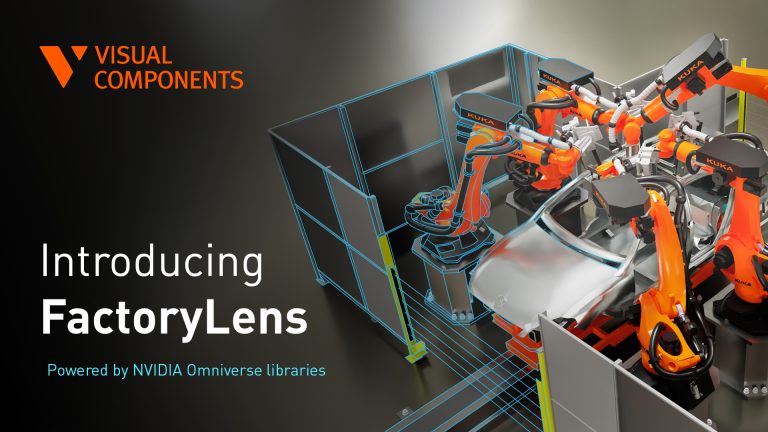
Introducing FactoryLens: turn factory simulations into realistic customer experiences
Visual Components launches FactoryLens, extending its collaboration with NVIDIA for industrial digital twins. FactoryLens helps system integrators and machine builders present Visual Components simulations with realistic materials, lighting, and shadows,...
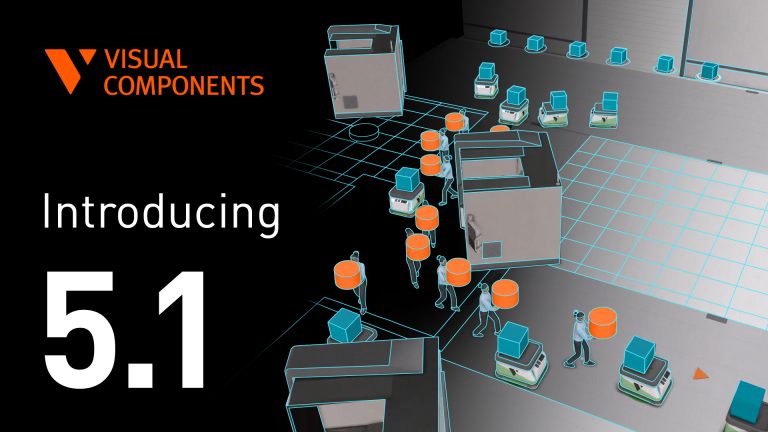
Introducing Visual Components 5.1 – Orchestrate the floor with ease
Simulate large factories with smarter mobile robot navigation, reliable physics, and real controller logic. Visual Components 5.1 makes it easier to simulate large factories with mobile robots, accurate physics, and...
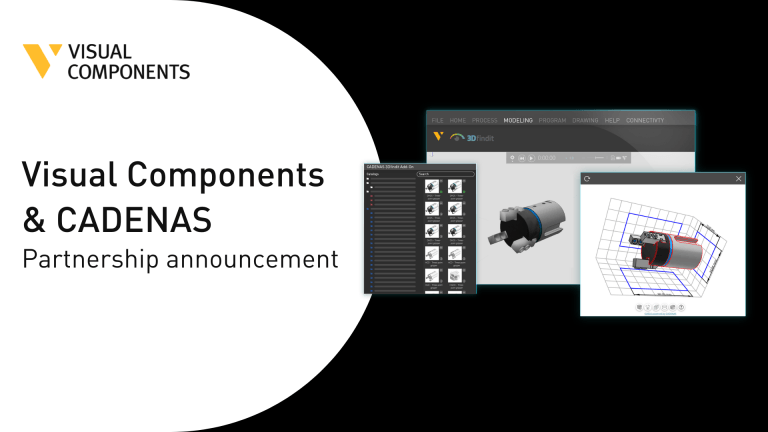
Visual Components partners with CADENAS to deliver millions of vendor-verified CAD models for 3D manufacturing simulation
Seamless access to verified CAD models At Visual Components, we strive to improve how our users plan, simulate,...