Cost per weld: how to compare robot programming software as production scales
Calculate robot programming software cost per weld and compare license, subscription, and weld-credit pricing as parts and variants scale.
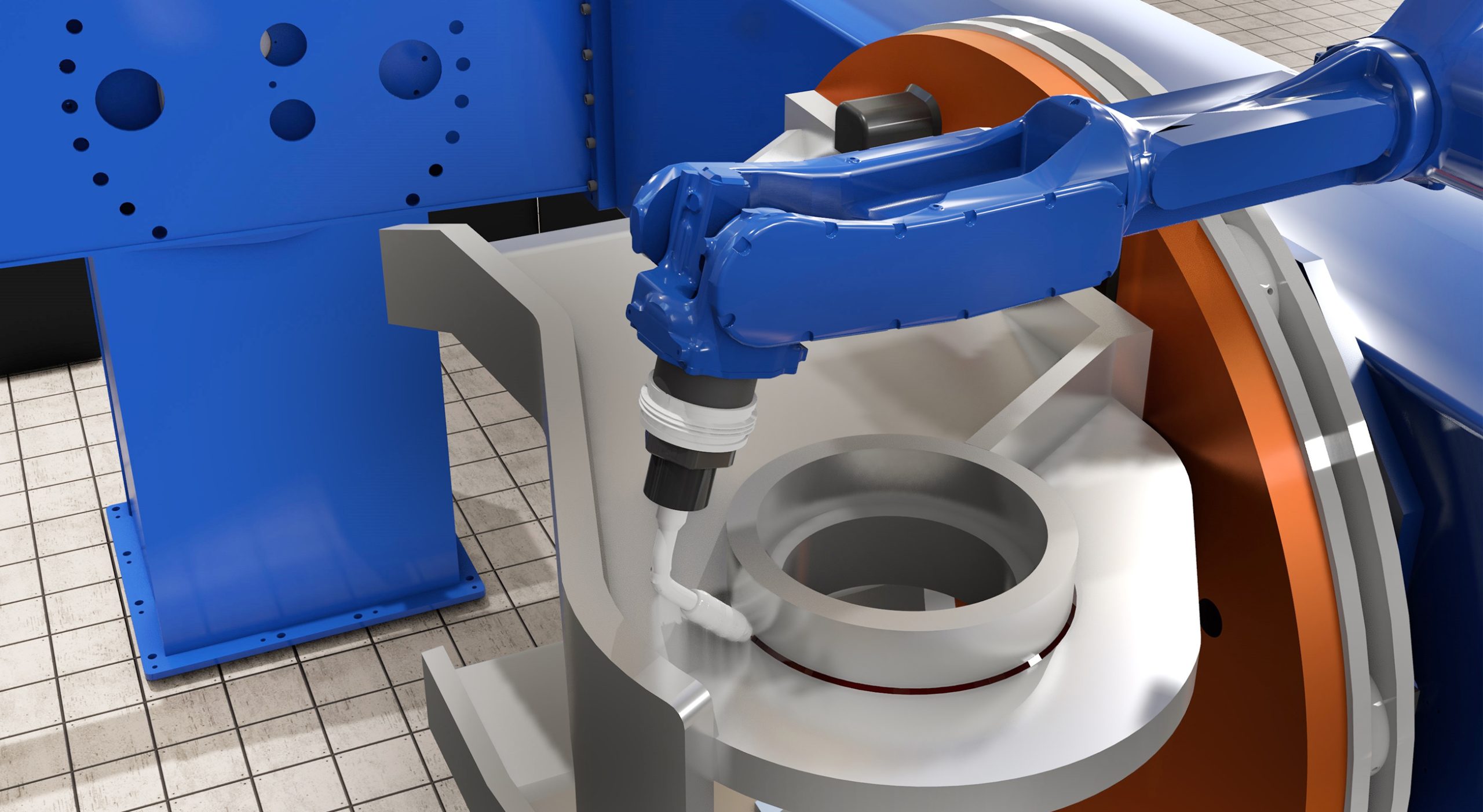
Two robot offline programming (OLP) offers can show similar headline prices yet cost very different amounts in practice. One supplier may charge for access over time. Another may include a set number of weld units and charge for anything above that allowance. Before comparing prices, you need to know how much work each offer covers.
To calculate software cost per weld, divide the total comparable software-related cost over a defined period by the unique eligible weld seams programmed in that period. Use the billable unit in each supplier’s contract. This measures programming software cost, not the cost of wire, gas, energy, labor, inspection, or rework.
The difference becomes more noticeable in high-mix production. New parts, variants, and design revisions all add programming work. An offer that looks economical for a pilot may look less attractive after you add more parts, cells, or sites.
First, define what counts as a weld
“Weld” isn’t a precise commercial unit on its own. It could mean a geometric seam, one pass within that seam, a path generated by software, or a physical weld made on every produced part.
Keep these units separate:
- A weld seam or joint is one geometric welding task on a part.
- A weld pass or layer is one pass within a seam. A multi-pass joint can require several passes.
- A programmed weld is a seam detected, selected, generated, or processed in the software. The exact trigger depends on the supplier’s terms.
- A produced weld occurs each time the robot runs the program on a physical product.
- A part program is the complete program for a part or part family. It may contain many seams and passes.
- A variant is a product version that may reuse all, some, or none of an existing program.
Don’t divide software cost by every weld produced unless that is also the commercial unit in the quote. Most software comparisons concern programming activity, not the number of times production repeats a program.
Ask each supplier what consumes an allowance or creates a charge:
- Does CAD seam detection count, or only a generated path?
- Does a multi-pass joint count once or once per pass?
- Does recalculating a seam after a design change count again?
- What happens to cloned or reused paths?
- Do deleted programs, training exercises, and test programs count?
- Does uploading a program to a controller trigger usage?
- When does an allowance reset, and do unused units roll over?
- Can users, cells, and sites share the same allowance?
If one quote meters seams while another meters passes or processing events, convert both to a common workload. State the conversion assumption instead of treating unlike units as equal.
Estimate your annual programming workload
Use your engineering records for this estimate. An industry average won’t reflect your product mix, reuse, or revision rate.
| Input | What to collect | Suggested source |
| New part families | Parts that need a substantially new program | Product and manufacturing engineering |
| Variants per family | Variants that introduce new or changed seams | Engineering change history |
| Seams per part | Counts from CAD data or completed programs | Welding and robot engineering |
| Reuse rate | Paths or templates reused without a new billable event | OLP records and supplier terms |
| Design revisions | Revisions that cause seams to be processed again | PLM and change records |
| Multi-pass factor | Passes per seam where the offer meters passes | Welding engineering |
| Pilot and training use | Non-production work that consumes an allowance | Quote and contract |
| Growth | Planned increases in products, cells, users, or sites | Operations plan |
Calculate each year separately if adoption or production complexity will change.
Gross seam workload = sum of new or changed parts and variants × average seams per part
New billable weld units = gross seam workload × (1 − eligible reuse rate) × revision factor × billing-unit conversion factor
Use a revision factor of 1.0 when no seams need to be processed again. If revisions add work equal to 15% of the initial billable workload, use 1.15. The billing-unit conversion factor is also 1.0 when one eligible seam equals one billable unit. Increase it if the supplier meters individual passes or multiple processing events.
One average can hide a lot. A simple bracket and a complex frame may require very different amounts of work, so calculate their seam workloads separately.
Compare OLP cost per weld across pricing models
Keep the time horizon and scope the same for every offer. Three years is a useful starting point because it captures implementation and recurring costs. Add a five-year view when comparing a perpetual license with a subscription.
License or subscription not metered by weld count
Include every cost needed for the planned scope:
- License or subscription fees over the analysis period
- Maintenance and support, if separate
- Implementation, cell modeling, calibration, and commissioning
- Training and adoption time
- Required post-processors, integrations, hardware, or services
- Additional users, cells, sites, or modules
Effective software cost per programmed weld seam = total comparable cost over the period ÷ total programmed seams over the period
If the price doesn’t change with weld count inside the licensed scope, more use spreads the cost over more seams. The scope still matters. Extra users, cells, robot controllers, modules, or sites may change the total.
Included allowance with overages or credit packs
Start with the same implementation, training, support, and integration costs. Then add the costs tied to usage:
- Access or setup fees
- Included weld units and allowance period
- Overage price or required credit packs
- Pack size and rounding rules
- Expired or unusable credits
Required overage units = maximum of zero and (billable weld units − included allowance)
Required packs = required overage units ÷ units per pack, rounded up to a complete pack
Total comparable cost = access and setup + overage or packs + other comparable costs
Effective software cost per programmed weld seam = total comparable cost ÷ total programmed seams
For a small and predictable workload, this model may offer an economical entry point. As programming volume grows, costs can jump at allowance or pack thresholds.
Perpetual license
A perpetual license usually shifts more of the cost to the start of the contract and may provide continuing usage rights. Compare it over a stated three- or five-year period, with maintenance, support, upgrades, and implementation included.
Don’t compare the full purchase price with only one year of a subscription. Show annual cash flow and cumulative cost. If your finance team amortizes the purchase, keep the accounting treatment separate from the underlying cash-cost comparison.
A worked workload example
These numbers are illustrative. Use your engineering records and dated supplier quotes before making a purchase decision.
Assume a manufacturer expects the following in year one:
- 12 new or changed parts
- 160 programmed seams per part on average
- 25% of paths eligible for reuse without a new billable event
- Revisions equal to 10% of the remaining workload
- One billable unit per eligible programmed seam
The calculation is:
- Gross seam workload: 12 × 160 = 1,920 seams
- Workload after eligible reuse: 1,920 × 0.75 = 1,440 seams
- Workload after revisions: 1,440 × 1.10 = 1,584 billable weld units
Repeat the calculation for years two and three. If you expect adoption to grow, increase the number of parts. Adjust the reuse rate according to what the contract treats as a new billable event.
| Scenario | New or changed parts per year | Average seams per part | Reuse rate | Year-one billable units | Three-year comparable cost | Effective cost per seam |
| Low and stable | Reader input | Reader input | Reader input | Calculated | Dated quote | Calculated |
| Expected | 12 | 160 | 25% | 1,584* | Dated quote | Calculated |
| Growth or multi-site | Reader input | Reader input | Reader input | Calculated | Dated quote | Calculated |
*Illustrative result includes a 1.10 revision factor and assumes one billable unit per eligible seam.
Once the workload is clear, enter complete, like-for-like commercial offers. Show annual cash cost, cumulative cost, effective cost per programmed seam, and any crossover point. Then test seam volume at 25% below and above the expected level. Repeat the test for reuse and revisions.
Plot annual programmed seams on the horizontal axis and effective software cost per seam on the vertical axis. A non-metered cost curve generally falls as usage increases within the licensed scope. A metered offer may move in steps at allowance or pack thresholds. You can calculate the actual crossover point only with current, approved quotes.
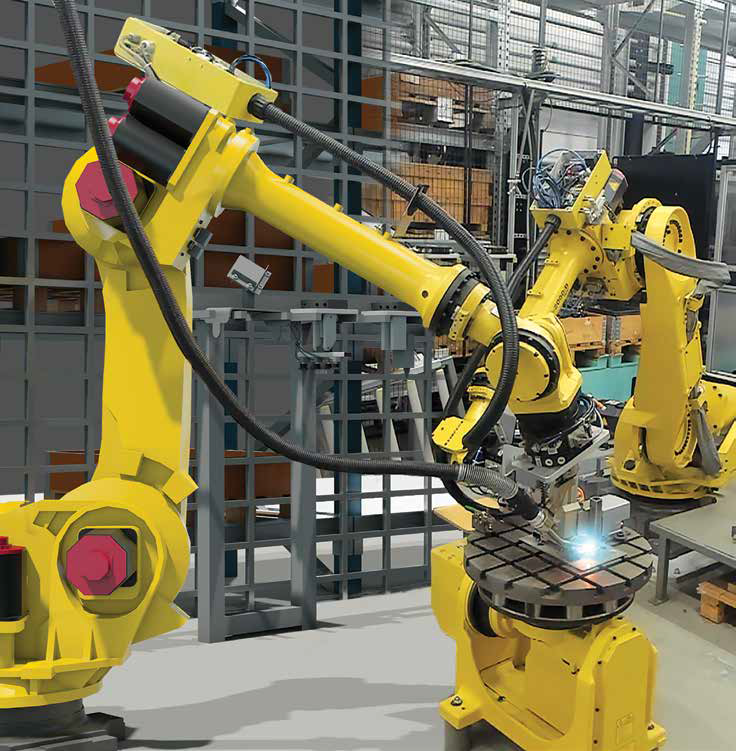
Cost per weld is only one part of the decision
The lowest effective software cost per programmed weld seam isn’t necessarily the best value. The software still has to handle your parts, robots, and production environment.
Evaluate the wider economic effect separately:
- Production downtime avoided by programming offline
- Engineering time needed for each program
- Reuse of paths, templates, and process knowledge
- Calibration, commissioning, and shop-floor touch-up
- Support for your robot brands, controllers, positioners, and external axes
- Multi-robot and multi-pass welding requirements
- Weldability checks before parts and fixtures reach production
- The ability to save approved welding parameters and process data for reuse across programs
- Support for other processes, simulation, and virtual commissioning
- Data, security, deployment, training, and integration requirements
A low unit price won’t help if the software doesn’t support the cell, controller, process, or accuracy you need. Test each option on a representative part before deciding.
Robot-brand flexibility also matters when you plan future cells. Brand-agnostic software may let you evaluate robots from different manufacturers without changing your programming platform. That doesn’t mean every robot is interchangeable: confirm support for each controller, positioner, and external axis, along with your team’s operator skills and service needs. Include any new post-processors, training, and validation in your cost comparison.
Ask how each tool saves and reuses welding process data. Keeping approved parameters, procedures, and proven settings in one place can help teams build consistent process standards for new parts and variants. Check what engineers can reuse across cells and robot brands, and what they must qualify again before production. Count any time saved in the wider operational assessment, not as a reduction in the quoted software price.
Ponsse is one example of why the operational view matters in high-mix welding. The company makes around 1,000 highly customized forest machines per year with a batch size of one. According to the published case study, Visual Components OLP reduced programming time for a complex frame from 10 days to one day. The team can program outside production instead of stopping the production system.

Ponsse also checks new frames for weldability before ordering plates and starting production. The team refines existing programs and works with several Yaskawa and ABB robot stations. This is one company’s result, not a general benchmark. It does, however, show what a narrow software cost metric leaves out.
Visual Components OLP supports welding and other industrial processes, layouts from one robot to multi-robot systems, multi-layer welding seams, and calibration workflows. Its public product page lists built-in post-processors for 22 robot brands and more than 40 robot controllers. Commercial scope and license terms aren’t published on that page, so confirm users, cells, sites, modules, support, and any usage boundaries in a written quote.
Which pricing model fits which workload?
Usage-based pricing may suit a pilot or a small number of simple programs. It can also work for a stable workload when a low initial commitment matters. Check when credits expire and whether revisions, tests, and reused work consume them.
A license or subscription not metered by weld count may work better for teams with many seams, frequent revisions, or plans to add parts and variants. Ask whether extra users, cells, sites, or capabilities change the price.
A perpetual license may fit an organization that expects to use the software for years and prefers a capital purchase. Include maintenance, support, upgrades, and residual usage rights in the model.
In every case, validate technical fit with a representative part. The commercially attractive tool becomes expensive if it creates more engineering work or can’t produce a usable robot program.
Make the comparison with your own data
Start with one year of part, variant, seam, reuse, and revision data. Get written answers for every billing trigger. Then compare low, expected, and growth cases over the same period.
Keep the billable unit, workload, scope, and time horizon consistent. Engineering, operations, procurement, and finance can then review the comparison on the same basis.
Talk to a Visual Components OLP expert to review a cost-per-weld scenario based on your parts, variants, cells, and expected growth. You can also explore our complete guide to robot offline programming before building your model.
Frequently asked questions
Divide total comparable software-related cost over a set period by the consistently defined programmed weld seams in that period. Include license or subscription fees, usage charges, implementation, support, training, and required integrations. Don’t include every physically produced weld unless that is the supplier’s billable unit.
It depends on workload and commercial terms. Usage pricing may cost less for a small, stable workload. A non-metered license can produce a lower effective cost per seam at higher use. Compare current quotes with the same scope and time horizon.
The customer receives or buys a set number of billable weld units. Usage above that allowance may require an overage payment or another pack. The real cost depends on how the supplier defines a unit and handles resets, expiry, rollover, revisions, and reuse.
No. A seam is a geometric welding task or joint. A pass is one layer of weld metal within that seam. A multi-pass joint can contain several passes. Check which unit the supplier meters.
Reuse can reduce engineering work, but it reduces billable usage only if the supplier’s terms don’t count cloned, recalculated, or reprocessed paths as new events. Use an eligible reuse rate based on both engineering records and contract language.
Not automatically. It can give you more choice when you add or replace a robot, but confirm support for the specific brand, controller, and external axes. Operator experience, service coverage, post-processors, and process validation can still limit your options.
If the software lets your team save and reuse approved parameters and procedures, you can build more consistent process standards across programs. Check what transfers to new parts, cells, and robot brands. Treat any engineering-time benefit separately from software cost per programmed seam.

Further reading
Introducing FactoryLens: turn factory simulations into realistic customer experiences
Visual Components launches FactoryLens, extending its collaboration with NVIDIA for industrial digital twins. FactoryLens helps system integrators and machine builders present Visual Components simulations with realistic materials, lighting, and shadows,...
How to program a FANUC robot offline with Visual Components
Learn how to build, calibrate, validate, post-process, and deploy a FANUC robot program offline with Visual Components.

Synchronized robot motion: how OLP makes multi-robot programming manageable
Multi-robot cells can weld, handle, and reposition large parts in ways one robot cannot. Offline programming gives engineers one place to program the complete system and find problems before commissioning.