SEJFO transforms automation sales with Visual Components simulation
Sejfo Group, a Swedish automation provider with 800+ delivered projects, replaced static CAD and PowerPoint with Visual Components simulation. The result: clearer customer communication, safer robot selection, validated cycle times, and quotes that win deals.
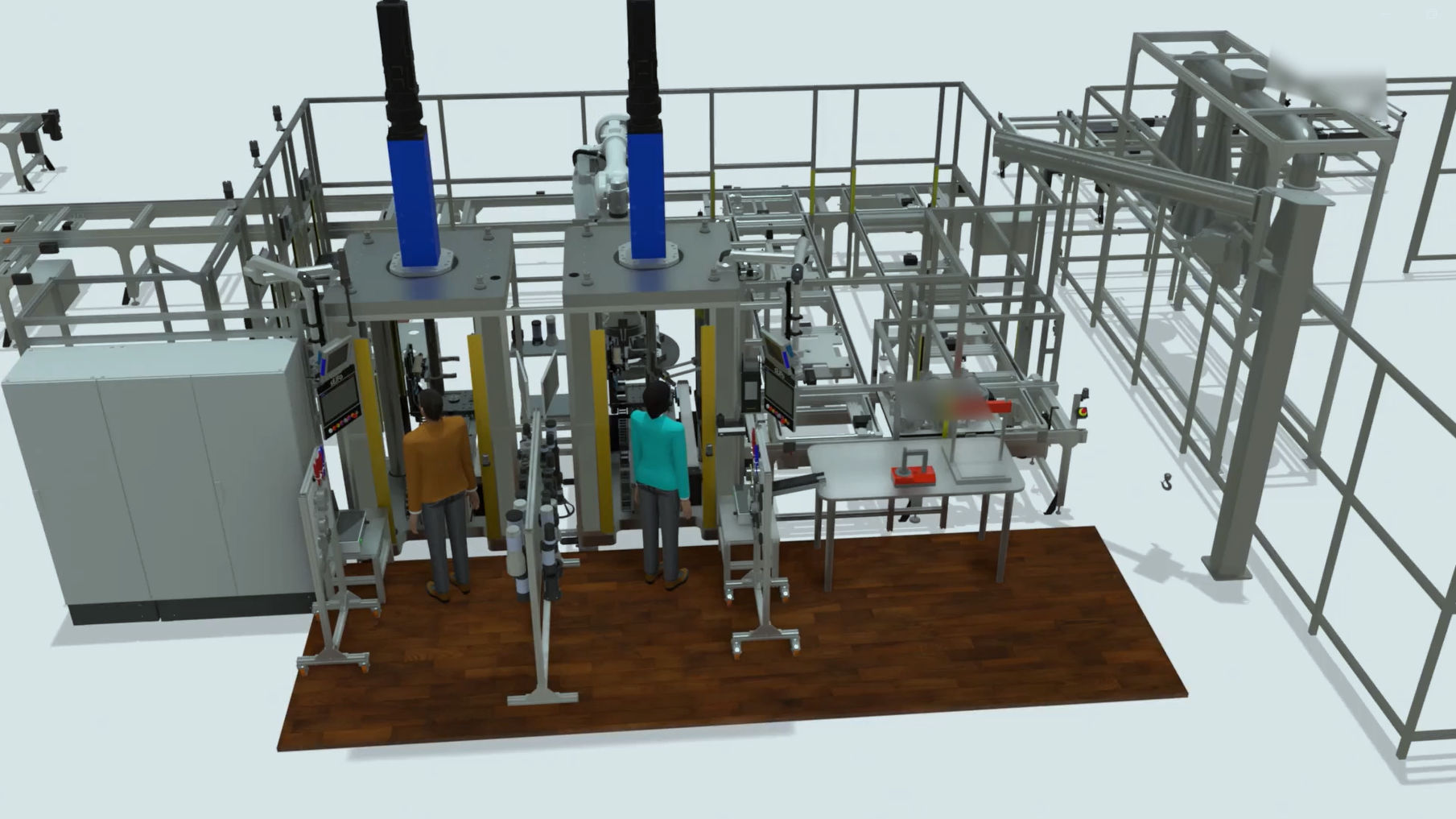
SEJFO Group is a Swedish system supplier of factory automation. Before Visual Components, their sales team was stuck between two outdated options: CAD models that went too deep for most customers, or PowerPoint slides that left too much to interpretation. Visual Components fixed that. It also opened up a few problems they hadn’t anticipated.
From guesswork to clarity
For SEJFO, selling automation used to mean picking the lesser of two problems. Go deep with CAD and lose the customer in technical detail. Stay high-level in PowerPoint and leave them guessing what the actual solution looked like.
“We either got really deep into details, as you do with CAD, or we got really just an overview with a square for this process and a square for that process, and a robot arm in the middle.”
Erik Andersen, Technical Sales / Concept Developer at SEJFO Group.
When the visuals are vague, so is the customer’s understanding. People with different backgrounds walked away from the same presentation with completely different ideas of what they’d actually be getting.
“It was very much up to the background of the customers. If we were talking to a young person or a more experienced person, they had different ways of visualizing in their minds what we were presenting. It was unclear communication. It was very much up to the interpretation of the customer.”
Erik Andersen, Technical Sales / Concept Developer at SEJFO Group.
“The old guard could understand 2D drawings, but the new up-and-coming engineers need to see it in 3D.”
Karl Ingström, Director of Sales at SEJFO Group.
The old tools couldn’t be kept up. SEJFO needed a way to present automation solutions that were fast, accurate, and easy for everyone to understand — customers and colleagues alike.
One platform, one shared vision
SEJFO chose Visual Components simulation software. Two things sold them on it: ease of use, and the eCatalog library. But there was a third factor — the potential to start simple and grow.
“It was really important that the software we were selecting was easy to use and you could use it a little bit and still get a layout. But then you could also continue to work and eventually reach a digital twin. You have the potential with the software to go really far and then have a clear thread from sales to the shop floor.”
Erik Andersen, Technical Sales / Concept Developer at SEJFO Group.
“We looked at several tools. We worked a lot with other robot manufacturing tools, but there were no tools this easy to use. And also the eCatalog with all the components — that’s a major part that makes it very easy and quick to use.”
Karl Ingström, Director of Sales at SEJFO Group.
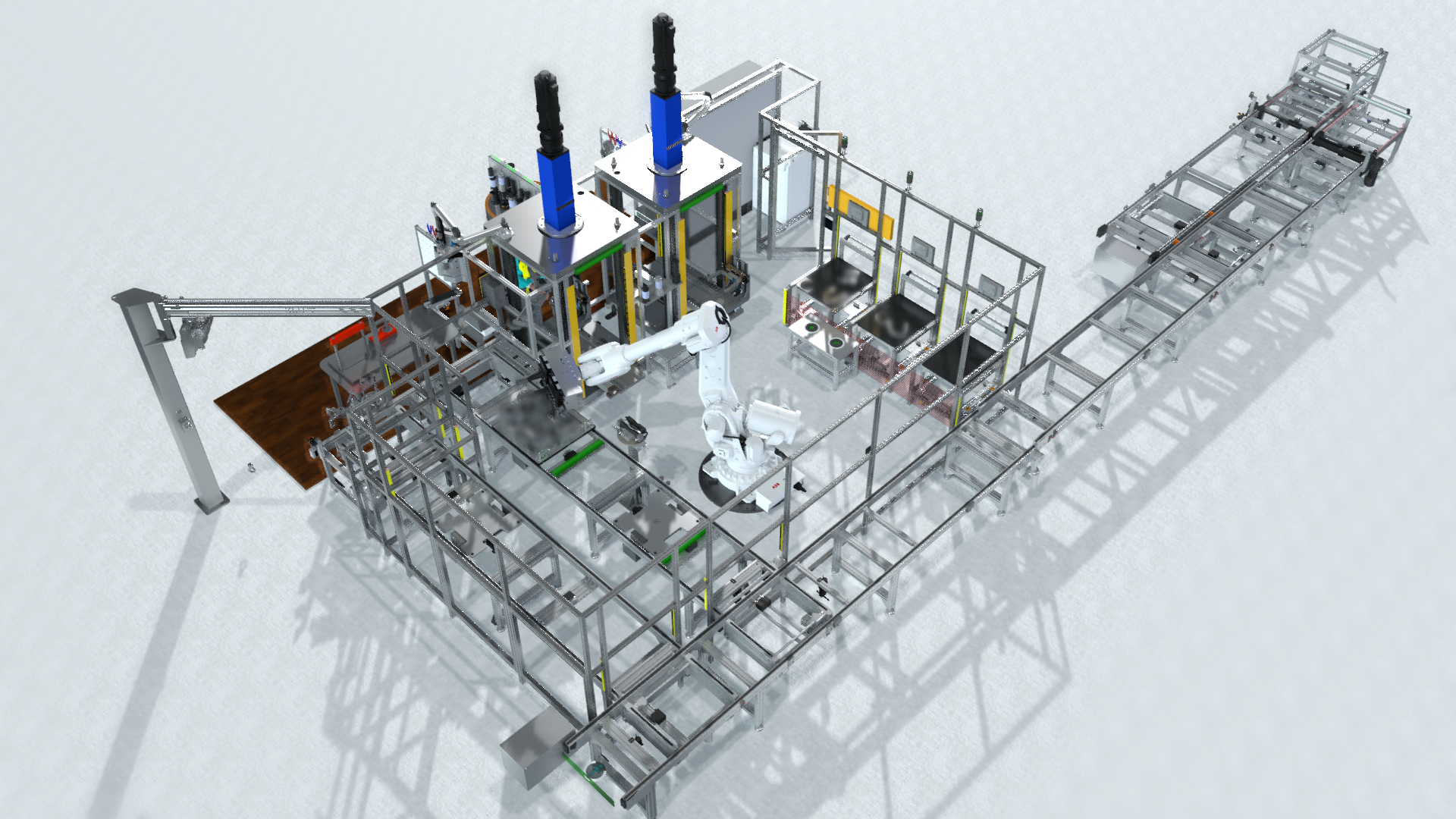
With Visual Components, SEJFO controls the level of detail in every presentation. Not too deep, not too vague — calibrated for the audience. And because the simulation is in 3D and moving, everyone sees the same thing.
That becomes especially important as solutions get complex. In PowerPoint or Excel, showing parallel operations is nearly impossible to follow. Two things happening at the same time, across multiple resources — you either drown the customer in detail or wave your hands and hope they fill in the gaps.

“When multiple things happen in parallel, it becomes immediately quite more difficult to understand when you try to explain that in PowerPoint or Excel format. But as complexity rises, it becomes really challenging to visualize and understand that using traditional software. With Visual Components, complexity is visible. Everyone watching the simulation sees what’s happening and when. When we visualize things with Visual Components, we also understand them better ourselves.”
Erik Andersen, Technical Sales / Concept Developer at SEJFO Group
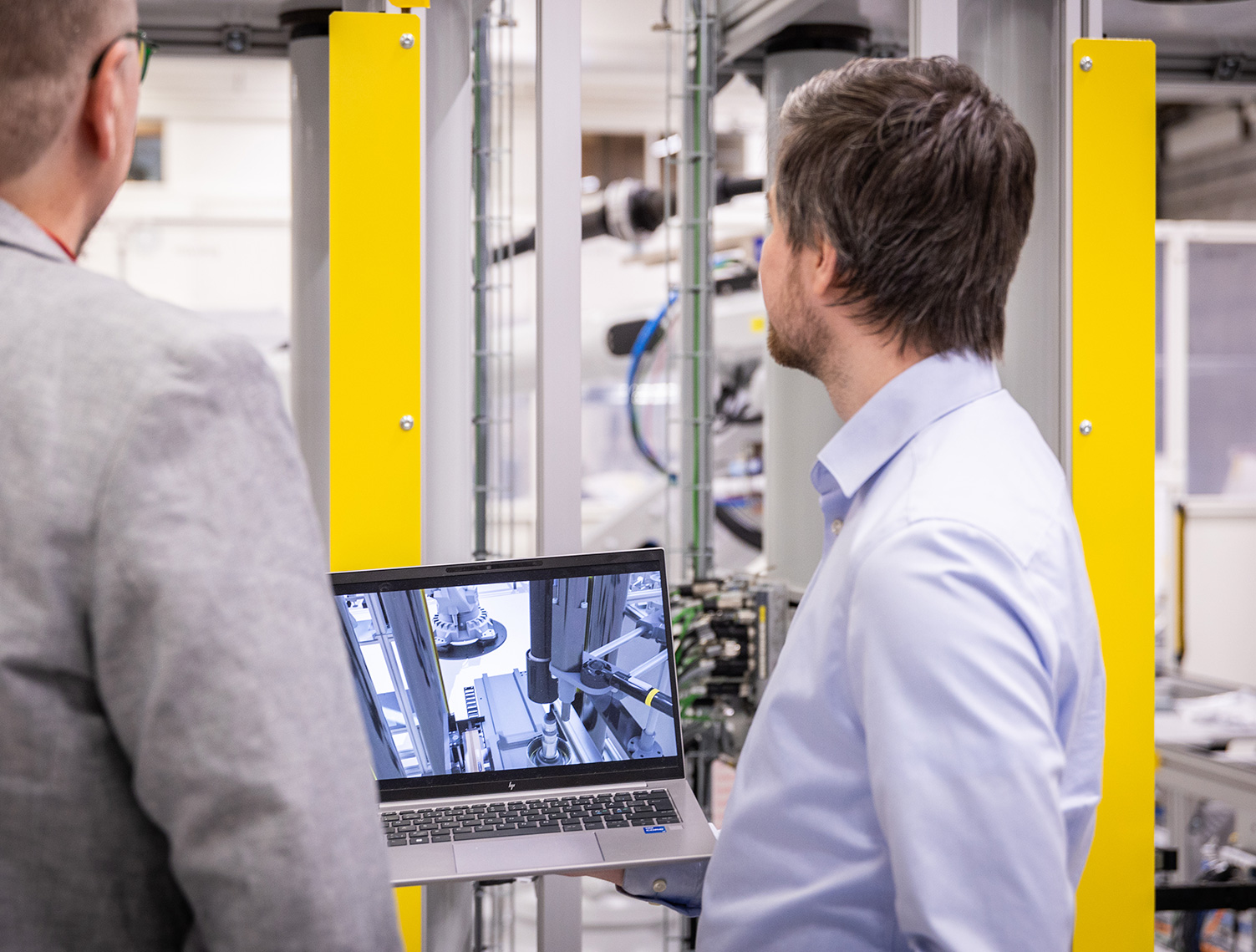
That internal clarity is as important as the external kind. SEJFO uses the same concept film to communicate the solution to the customer and to their own developers. One simulation, one shared understanding across the whole project.
“We use that same film when we’re sharing the story internally, so they see the same thing both internally and externally.”
Erik Andersen, Technical Sales / Concept Developer at SEJFO Group
And the visualization does something else: it replaces knowledge that used to live in one person’s head. Before, only the person who built the proposal really knew what was in it.
“Before, it was almost just one guy who had everything in his head. Now it’s more visualized. If we have the visualization, another guy can go in and do the calculation and the writing.”
Karl Ingström, Director of Sales at SEJFO Group.
Safer deliveries, better robot selection
Before Visual Components, SEJFO relied on experience and estimation when selecting robots and estimating cycle times. That worked — until it didn’t.
“Before we could guess. We guessed a lot more. Now we investigate more so we get safer deliveries. We choose the right robot, we don’t choose the wrong robots.”
Karl Ingström, Director of Sales at SEJFO Group.
Now SEJFO tests cycle times and validates layouts before the quote goes out.
“We didn’t get the kind of quality and safety in our proposal regarding selection of robots, selection of layout areas, and safety issues. We couldn’t look at them in the details.”
Karl Ingström, Director of Sales at SEJFO Group.
With Visual Components, SEJFO can spot risks during the concept phase and make adjustments before they commit. “Now we have much higher fidelity, so we can see a lot more risks or challenges. We can mitigate those or tweak a lot of things in the concept,” Erik says.
Erik Andersen, Technical Sales / Concept Developer at SEJFO Group
The quality improves over time as each project contributes new components to the Visual Components library, creating a stronger foundation for future concepts. With every product developed, new elements are created and saved, continuously expanding the library. As a result, both the quality and fidelity of the concepts have increased dramatically, since each new idea builds on a richer, more advanced baseline.
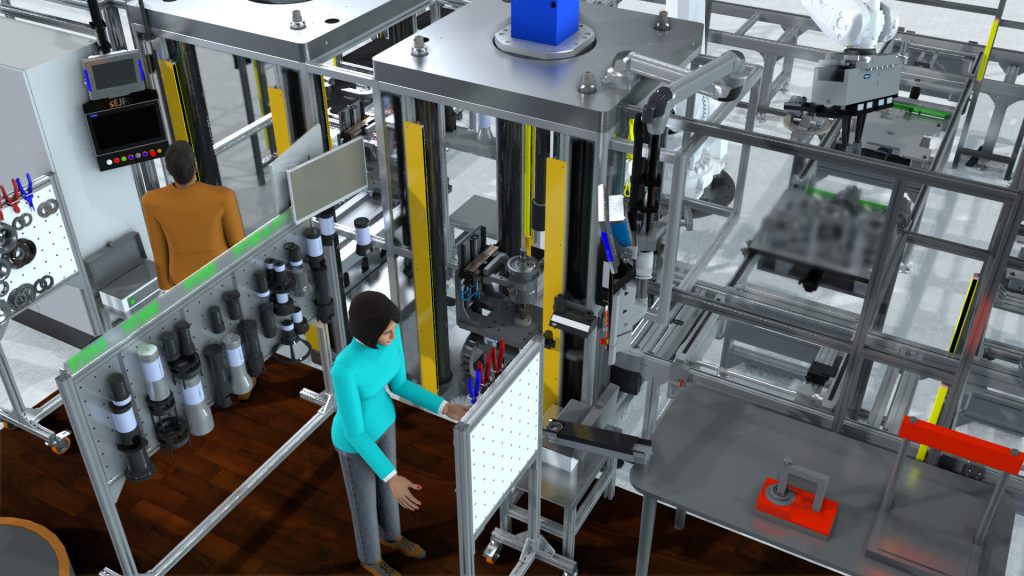
Before a concept goes to the customer, SEJFO also invites colleagues to review it. The visualization makes it easy for anyone on the team to understand and give feedback quickly — not just the person who built it.
Quotes that win deals
SEJFO delivers a concept within about three weeks of receiving a request. Those three weeks now produce much more than a static layout.
They don’t just send a quote and wait. Before the quote goes out, SEJFO works through the design with the customer — reviewing the layout together, making adjustments, aligning on what gets built.
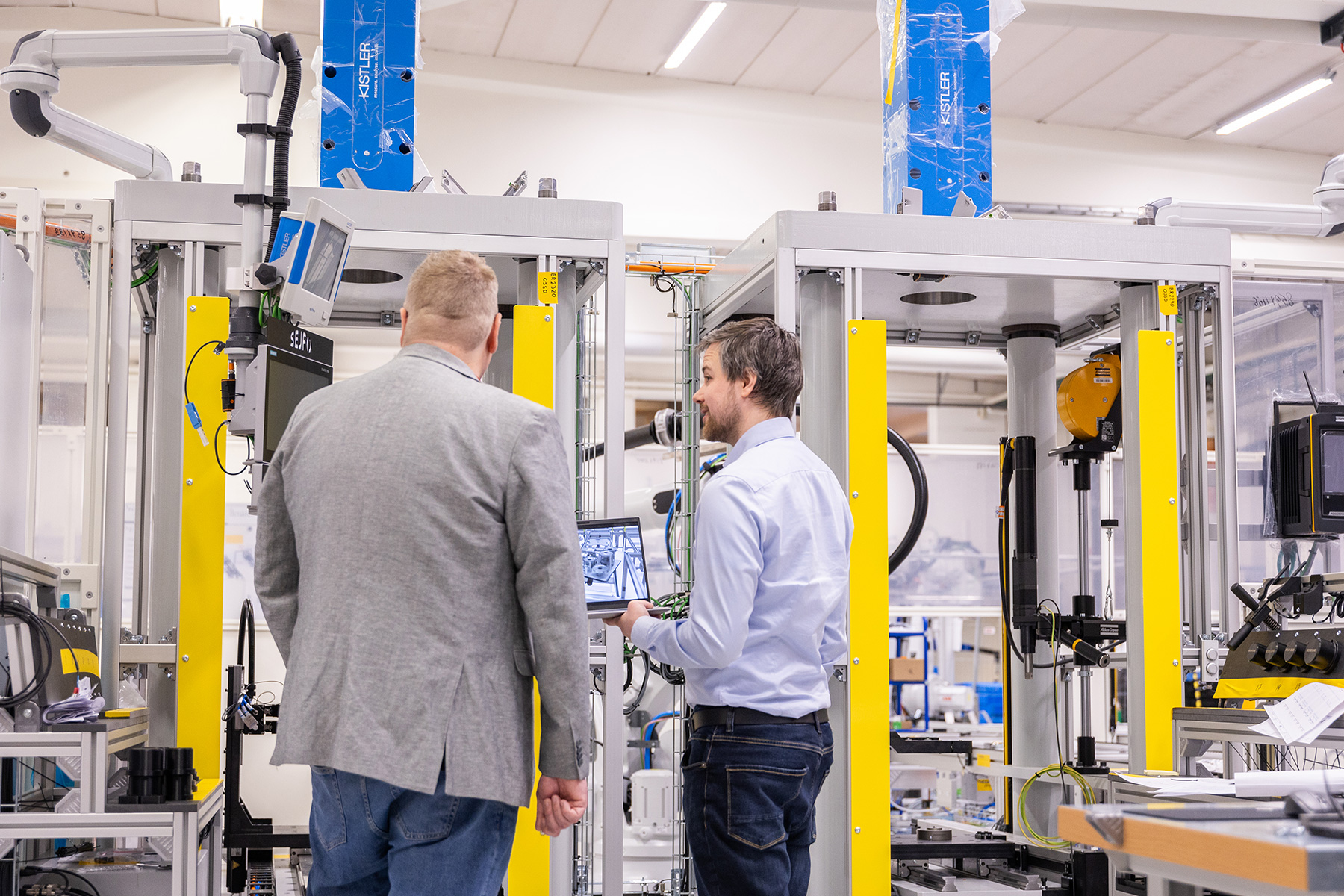
“We can do iterative work with the customers. We do several touch-ups on the way where we look at the layout and work with the layout before the quotes go in. And that aligns expectations a lot.”
Karl Ingström, Director of Sales at SEJFO Group.
They create a simulation, render a concept film, and pull images directly from that simulation into the quote. Every image has the same look and feel. No copy-paste from different sources, no rough-cut visuals.
“You got the feeling before that we copy-pasted from different sources really and made really rough things in-house. But with Visual Components, we get a uniform package that we can present to our customers.”
Erik Andersen, Technical Sales / Concept Developer at SEJFO Group
Customers can easily recognize what they see in the simulation because it closely mirrors their own factory floor, creating a sense of familiarity even before they make a purchase. This realistic representation helps them visualize how the automation solution would look and function in their own environment, allowing them to connect with the product. As a result, they gain confidence and understanding of the solution, even though they have not yet purchased it from SEJFO. And it directly affects whether deals close.
“We have gotten some specific deals just because we were able to visualize them better — we instilled a higher degree of confidence in our customers.”
Erik Andersen, Technical Sales / Concept Developer at SEJFO Group
The videos also have a life beyond the sale. Customers use them internally to drive approval and move projects forward. These animation materials help stakeholders clearly visualize the solution, making it easier to communicate ideas and gain alignment, which in turn supports closing deals more effectively. In addition, SEJFO can quickly produce and compare multiple concepts, turning what was once a single long iteration into several rapid ones, enabling faster evaluation and identification of the best solution moving forward.
“Customers use the material in their internal presentations to drive the project forward. That helps us a lot in closing deals.”
Karl Ingström, Director of Sales at SEJFO Group.
From sales floor to shop floor
SEJFO’s use of Visual Components doesn’t stop at the quote. When they win a project, the simulation built during the sales process becomes the foundation for delivery. Developers build on the same model — no gap between what was sold and what gets built.
“Today we have the concept, but then the product can deviate a bit from the concept. But that costs us money. The best thing for us is to have the concept as correct as we can when we sell it, so that everyone follows the concept and builds on the same model.When the simulation is right, the build is right. Gaps between what was sold and what gets built are where costs hide.”
Erik Andersen, Technical Sales / Concept Developer at SEJFO Group
The eCatalog plays a role here too. Components that appear in the catalog during the sales process get presented to the customer early — and those selections carry through to delivery.
“What we see in the library and the eCatalog is what kind of components we end up using. If they’re in the eCatalog, it drives us to use them because we present them to the customer early on — and it’s already selected and set in the project, so that makes the cycle time for delivery faster.”
Karl Ingström, Director of Sales at SEJFO Group.
What comes next
SEJFO has also pushed into virtual reality. When a customer’s project manager puts on VR goggles and walks through their future assembly line before a single piece of equipment is ordered, the reaction tends to be memorable.
“Sometimes we have also used virtual reality and put goggles on the project manager, and they have seen the assembly line beforehand. They get a really ‘WOW’ sensation from that.”
Erik Andersen, Technical Sales / Concept Developer at SEJFO Group
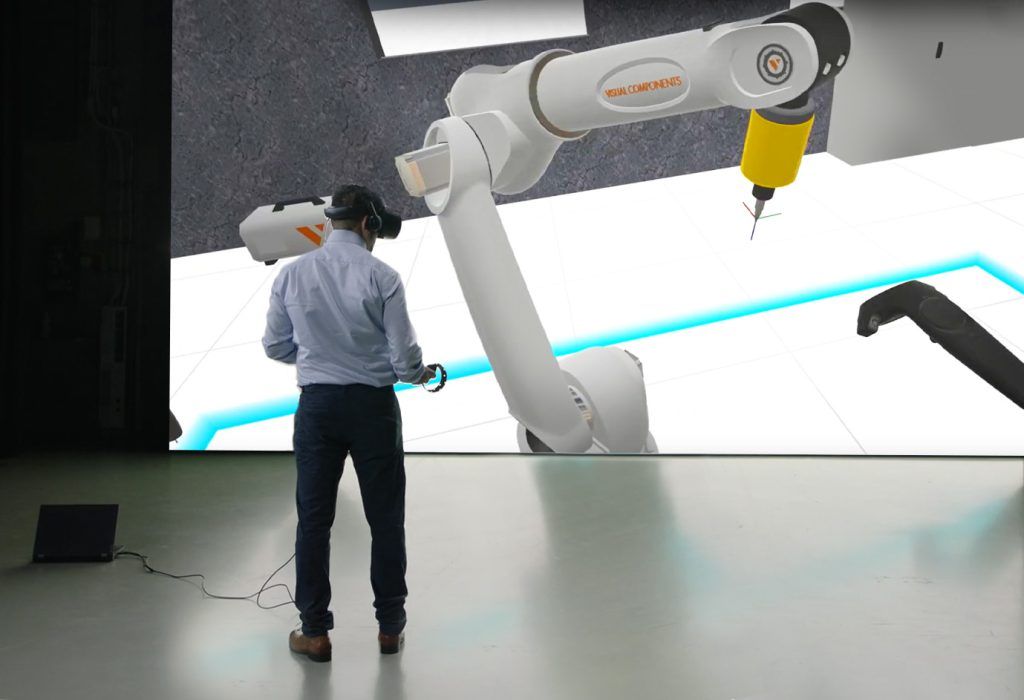
For SEJFO, 3D simulation is no longer optional — it’s the floor, not the ceiling.
“It will be mandatory to do the visualizations.”
Karl Ingström, Director of Sales at SEJFO Group.
SEJFO means to stay ahead of that expectation by setting a new standard for what a modern quote should look like, and they’re determined to keep that lead. In the past, a simple 2D drawing was enough for everyone to understand the idea, but that’s no longer the case. Today, 3D visuals are the baseline for clear communication, and expectations are already shifting again—toward animations and moving concepts that make it even easier for customers to fully grasp the solution.
The ambition is straightforward: a clean line from the concept film to the finished machine, with no surprises in between.

Key results
- Clearer customer communication — everyone sees the same 3D simulation, no interpretation required
- Safer deliveries — robot selection and cycle times validated before quoting, not after
- Deals won on visualization — customers are more confident, and some decisions come down to who can show the solution best
- Faster quoting — junior team members handle rough layouts; specialists handle animation and detail
- Consistent proposals — every image and video in the quote comes from the same simulation
- Better customer alignment — layouts reviewed with customers before quoting, iteratively
- Simulation carries to delivery — the same model built during sales becomes the project foundation
- Growing component library — each project adds reusable parts, raising the baseline for the next one
About Sejfo Group
SEJFO Group AB is a complete system supplier of factory automation based in Köping, Sweden. Founded in 1991, the company delivers turnkey automation solutions for the automotive, energy, pharmaceutical, and nuclear industries. With 130 employees and 800+ delivered projects, SEJFO Group designs, engineers, and builds custom machines and production equipment, all under one roof. The company is ISO 9001 certified.
SEJFO Group has been using the Visual Components software since 2022.
About Visual Components
Founded by a team of simulation experts and amassing over 20 years in business, Visual Components is one of the pioneers of the 3D manufacturing simulation industry. The organization is a trusted technology partner to a number of leading brands, offering machine builders, system integrators and manufacturers a simple, quick and cost-effective solution to design and simulate production processes and offline robot programming (OLP) technology for fast, accurate and error-free programming of industrial robots.
Want to learn more about the benefits of our solutions for your business? Contact us today!
Further reading
How EMIL SCHMID MASCHINENBAU designed a high-speed battery assembly plant with Visual Components
Facing the challenge of designing a fully automated battery assembly plant for a customer, EMIL SCHMID MASCHINENBAU turned to Visual Components. With 3D simulation and an extensive library of factory...
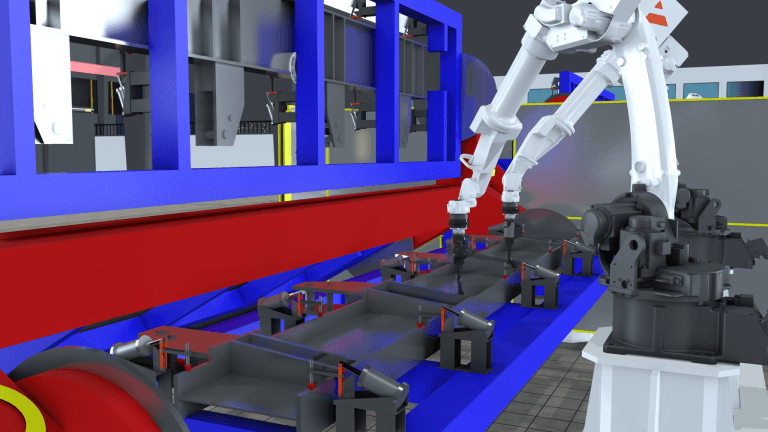
BENTELER rolls out the production technology of tomorrow with the help of Visual Components
Together with BENTELER Automobiltechnik, Karlsruhe Institute of Technology uses modern factory planning software from Visual Components to develop innovative production technologies.
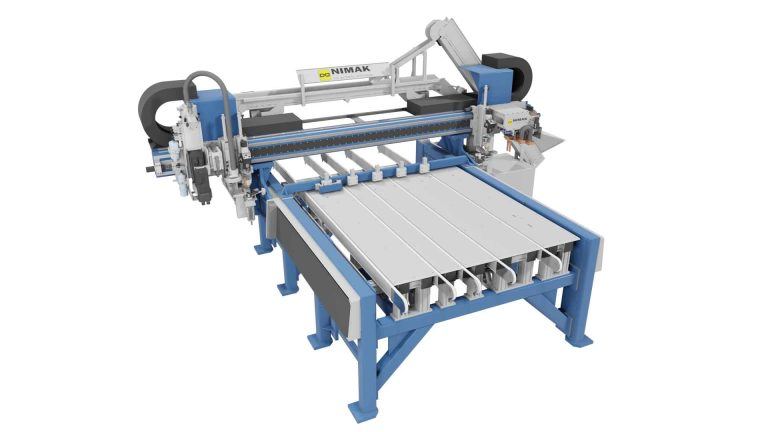
NIMAK Case Study: There Would Be No Cars Without This Company
In this case study, we’ll show you how NIMAK GmbH, the inventor of the robot welding gun and a leading manufacturer in the field of industrial joining technology, uses Visual...