Bucher Municipal: accelerating robot welding with Visual Components
Facing growing demand and limited robot availability, Bucher Municipal transformed its welding operations with offline robot programming. By validating programs virtually before deployment, the company reduced programming time by up to 70%, minimized production interruptions, and improved welding consistency, creating a more efficient path to automation.
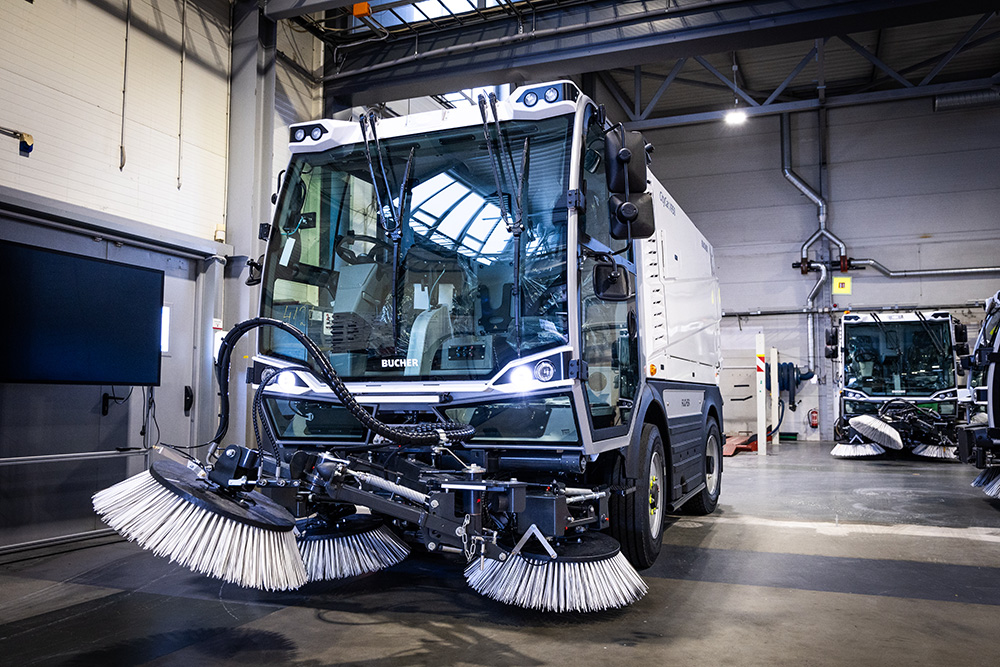
A global leader in compact sweepers
Bucher Municipal is a leading manufacturer of compact sweepers used by municipalities and cities worldwide. At its production facility, the company manages a full production cycle, from sheet metal processing and welding to final assembly and delivery of finished machines. The plant in Ventspils, Latvia produces four compact sweeper models, with an output of approximately 20-25 units per week.
As demand for productivity, quality, and manufacturing flexibility increased, Bucher Municipal recognized the need to expand the use of robotic welding across its operations. However, traditional robot programming methods were creating bottlenecks that limited growth.
Managing growth, quality and robot availability
Bucher Municipal began its robotics journey in 2017 when production of one of its products was transferred to the Ventspils plant. The company faced several challenges:
- Increasing productivity to meet growing production demands
- Ensuring consistent weld quality
- Addressing labor market constraints and shortages of skilled welders
- Managing multiple robot brands with different programming environments
- Minimizing production downtime caused by robot programming and program adjustments
According to Aivars Černuho, Head of Production Engineering, one of the biggest operational challenges was the constant competition between production and engineering teams for robot availability.
“The production needs to run the production, the engineers want to do the programming and checking of the tools and software. This is the challenge always.”
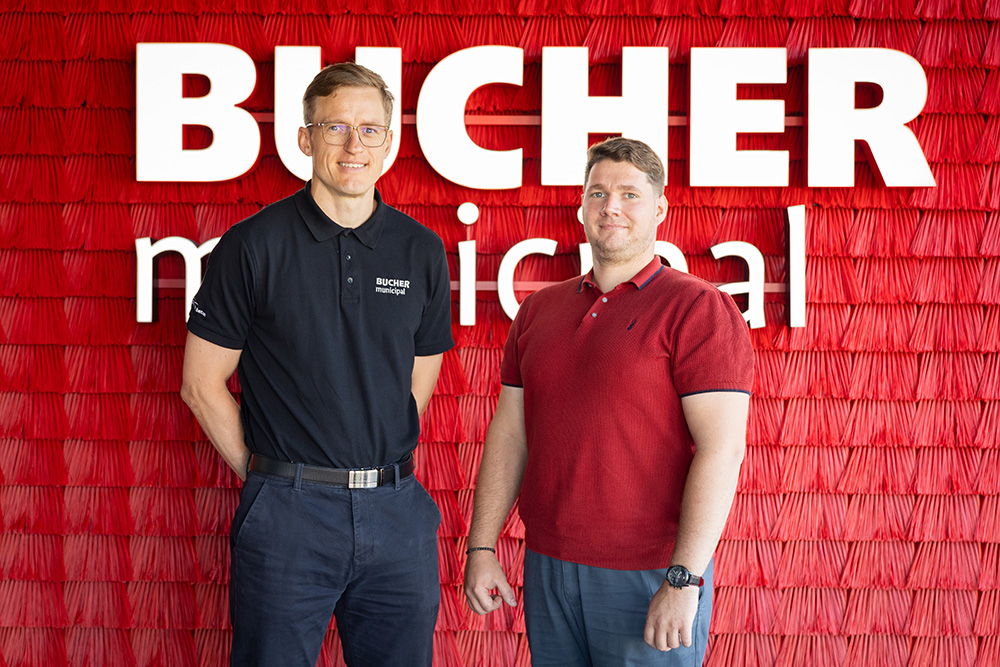
Aivars Černuho, Head of Production Engineering at Bucher Municipal
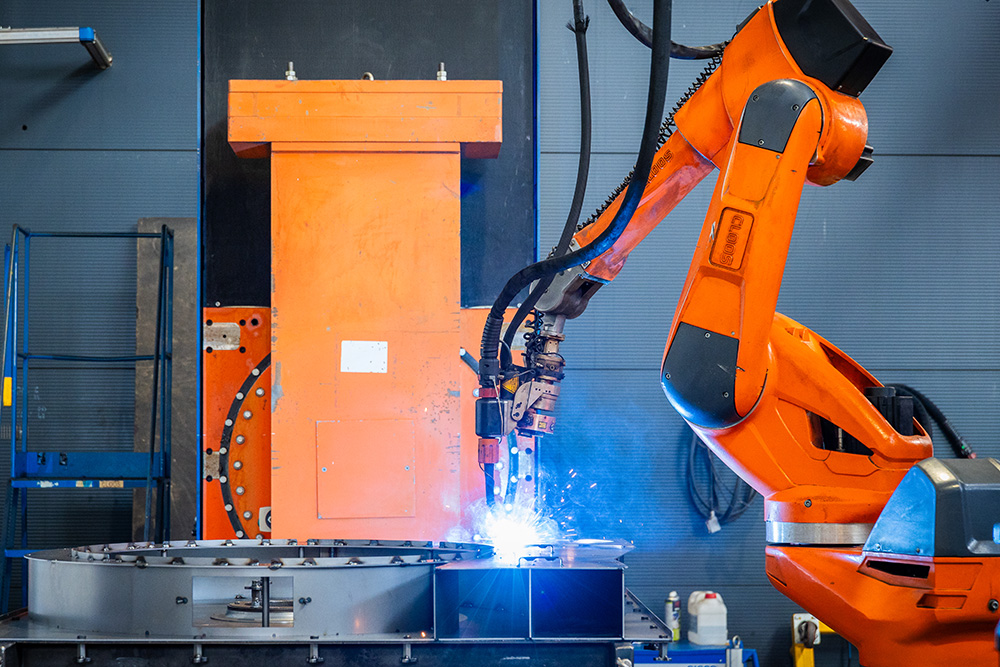
Before implementing Visual Components, robot programming was performed directly on the shop floor. Any new part or adjustment required engineers to occupy production robots, often forcing difficult scheduling decisions and potentially affecting manufacturing output.
Eliminating production dependencies with offline programming
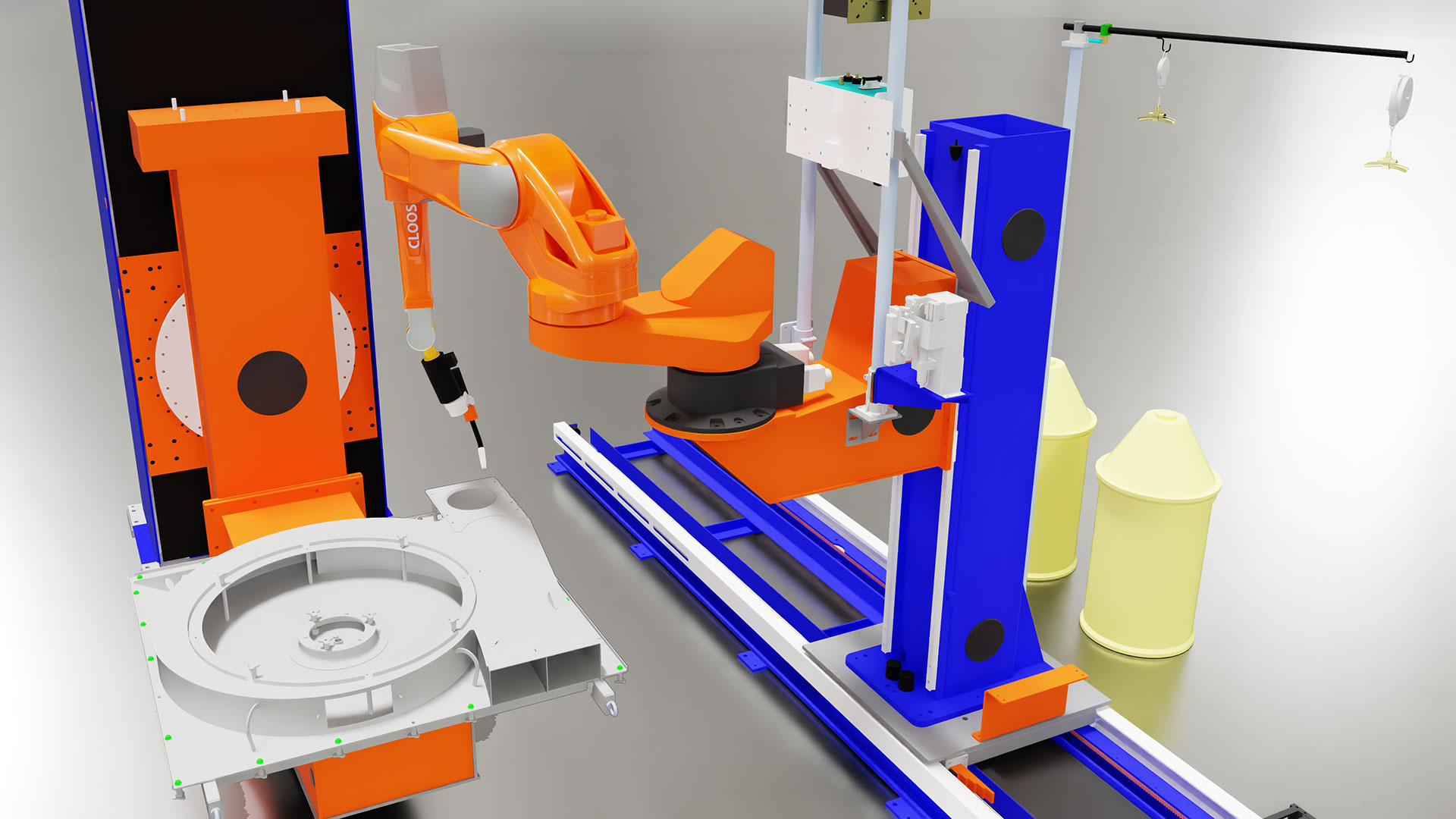
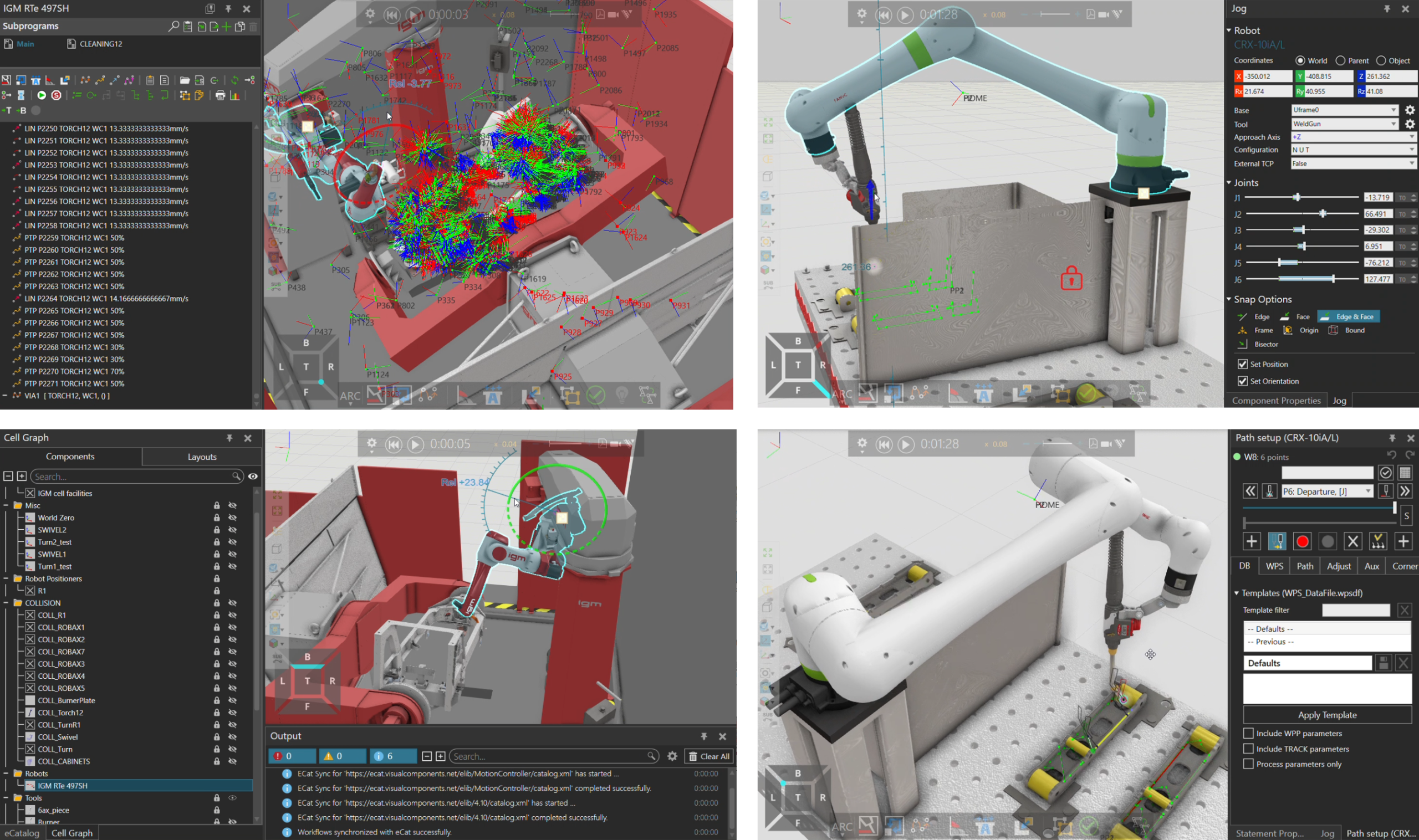
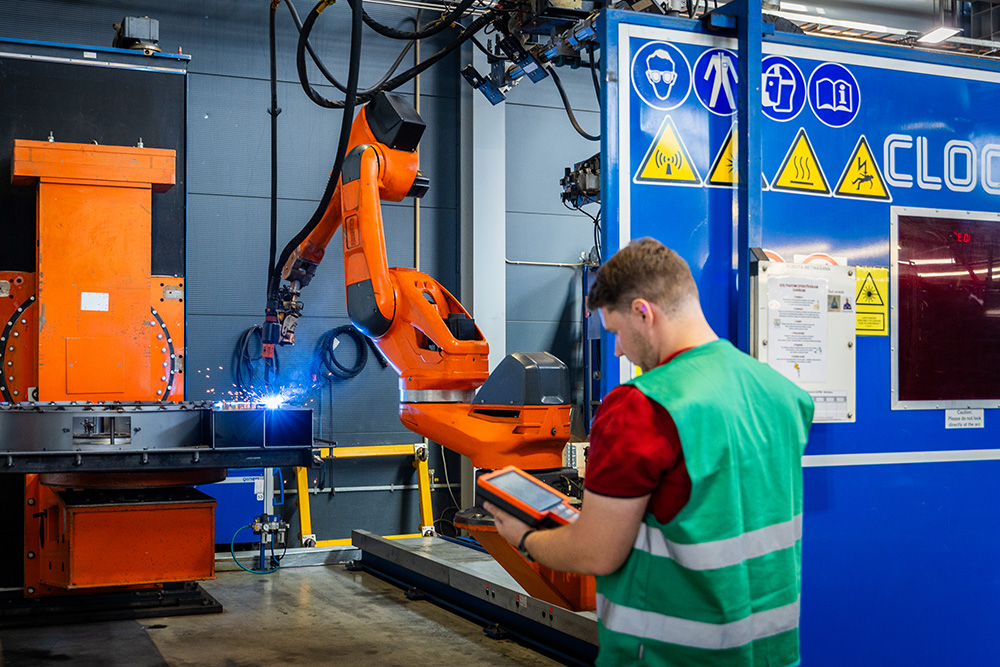
The company operates several robot brands, including CLOOS, IGM, and FANUC collaborative robots. Visual Components provided a brand-independent platform that allowed engineers to:
- Work remotely without interrupting production operations
- Create robot programs offline
- Simulate welding processes before production
- Validate jig and fixture designs
- Verify component accessibility and weldability
“The main advantage to use the Visual Components tool is that we can do it remotely. We don’t need to influence the production.”
Aivars Černuho, Head of Production Engineering at Bucher Municipal
Turning simulation into daily engineering practice
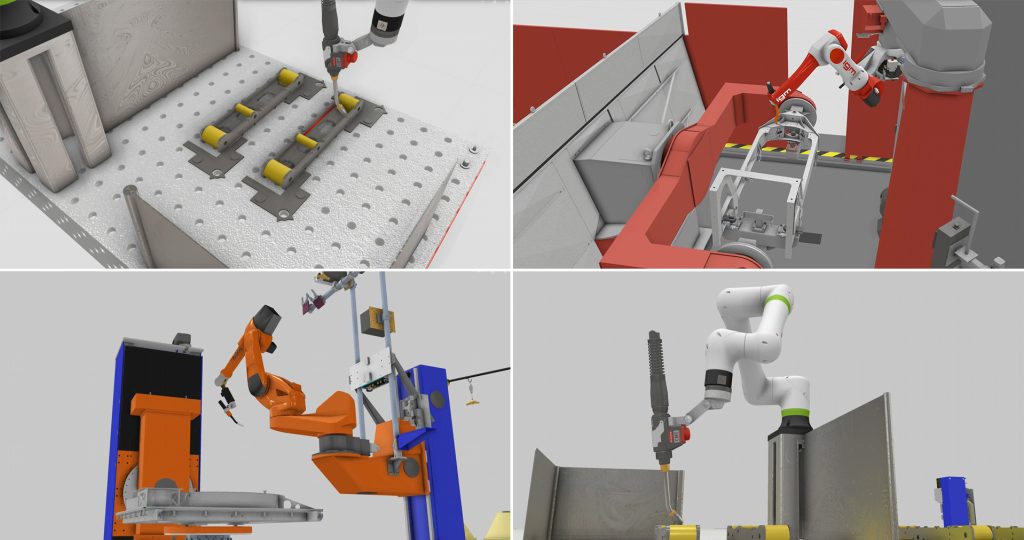
The automation team adopted Visual Components for robot offline programming, fixture design validation, and production simulation.
“Mainly, we are using Visual Components for robot programming. However, we also use it for simulating the design of the jig fixtures and the design of the parts when it’s just on the first stage.”
Aleksejs Sabarņa, Automation Engineer at Bucher Municipal
The implementation process was relatively fast. According to Aleksejs, the team became productive within approximately three weeks after learning the software and establishing the required libraries and post-processing workflows.
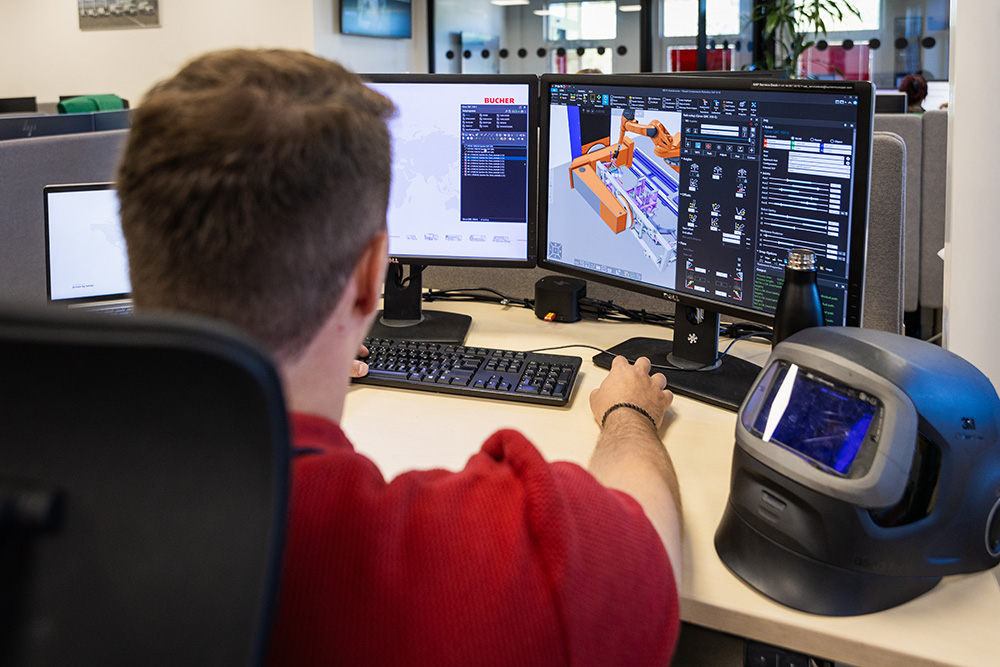
“For us, it took three weeks to become productive with Visual Components.”
Aleksejs Sabarņa, Automation Engineer at Bucher Municipal
Support from the Visual Components team also helped accelerate adoption. Colleagues from Visual Components helped quite a lot and the training course was very wide.
Up to 70% faster programming
The most significant benefit was the reduction in programming time. Initially, Bucher Municipal achieved programming speeds approximately 50% faster than manual robot programming. As the team gained experience and expanded its use of offline programming, the improvement increased to roughly 70%.
“Today we are around 70 % faster compared to manual programming.”
Aivars Černuho, Head of Production Engineering at Bucher Municipal
Alexey also observed substantial personal productivity gains.
“When I was starting creating my first program, I was programming around two hours for the first part. If we compare the same part right now, it will take like 20 minutes.”
Aleksejs Sabarņa, Automation Engineer at Bucher Municipal
Reduced production downtime
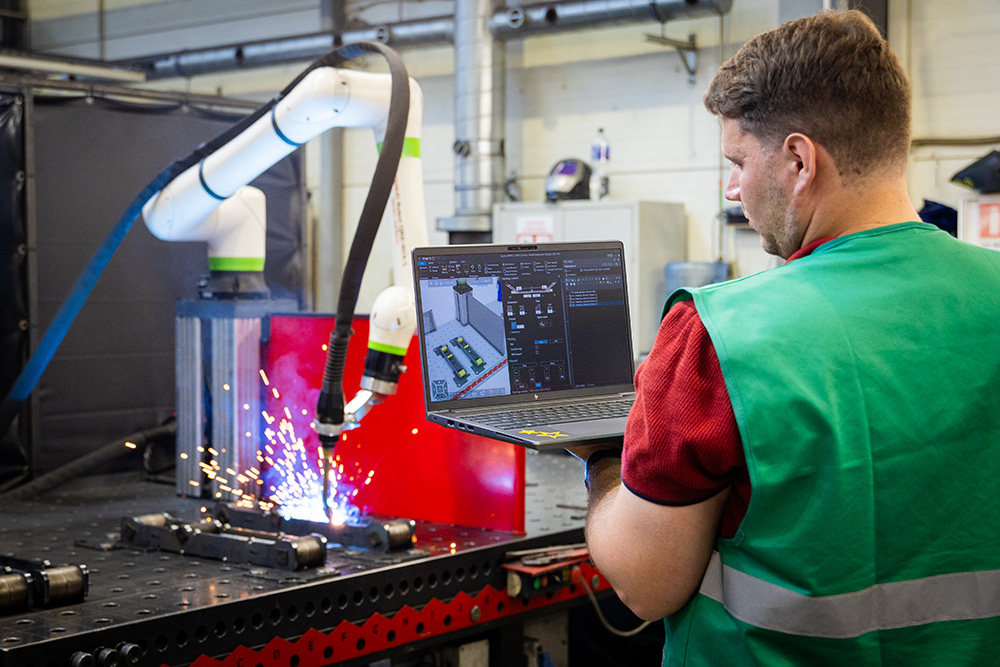
Offline programming removed the need to occupy production robots during programming and testing activities. Instead of interrupting production, engineers can now create, modify, and validate robot programs directly from their offices before transferring them to the robot.
“We can make some adjustments of the program, not in a real machine, but we can do it from our PC, so without any interruptions.”
Aleksejs Sabarņa, Automation Engineer at Bucher Municipal
This capability eliminated a major source of friction between engineering and production teams.
“With the offline programming tool you can find a good balance and don’t have any unneeded fights in the production.”
Aivars Černuho, Head of Production Engineering at Bucher Municipal
Improved quality and reliability
Visual Components enables engineers to identify robot limitations, collisions, singularities, and access issues before programs reach production. By analyzing robot motion in a virtual environment, Bucher Municipal can proactively optimize robot paths and reduce troubleshooting on the shop floor. The company also uses digital simulations to verify whether parts are suitable for robotic welding before production begins.
“You can upload the model in your digital twin, have a look if it’s weldable or handleable with the robot.”
Aleksejs Sabarņa, Automation Engineer at Bucher Municipal
Better fixture and tooling design
In addition to robot programming, Visual Components supports the engineering teams responsible for welding fixtures and tooling. The company now tests fixture concepts virtually before manufacturing them, significantly reducing design risk and improving the quality of tooling delivered to production.
“We are much better on delivering the right tooling for the robot welding and testing before we even produce it.”
Aivars Černuho, Head of Production Engineering at Bucher Municipal
Programming efficiency
- Customer has reduced the programming time by 70 %
- Example task reduction: from 2 hours to 20 minutes
Operational benefits
- Reduced robot downtime caused by programming activities
- Lower commissioning and debugging effort through virtual validation
- Improved weld quality consistency through simulation and optimization
- Faster introduction of new parts and products
- Improved utilization of existing robotic assets
These efficiencies have strengthened the business case for further robotics investments and accelerated Bucher Municipal’s digital manufacturing strategy.
Looking ahead
Bucher Municipal plans to continue expanding automation across the factory. The company is investing in additional collaborative welding robots and industrial robotic systems while exploring new applications beyond welding, including painting and other manufacturing processes. The company’s strategic objective is ambitious:
“Our aim is to go at least 30 % of the total welding hours with robots.”
Aivars Černuho, Head of Production Engineering at Bucher Municipal
With Visual Components serving as a platform for simulation, offline programming, and digital validation, Bucher Municipal is building the foundation for a more productive and automated future.
About Bucher Municipal Latvia
Bucher Municipal Latvia is part of the Swiss Bucher Industries Group and a key production site within Bucher Municipal. Located in Ventspils, Latvia, the state-of-the-art facility employs more than 400 people and covers over 21,000 square metres. The site specializes in the full-cycle manufacturing and assembly of compact sweepers, from metal processing and welding to painting and final assembly. Combining advanced technology, engineering expertise and the skills of its people, Bucher Municipal Latvia produces machines that help keep cities clean around the world.
About Visual Components
Founded by a team of simulation experts and amassing over 20 years in business, Visual Components is one of the pioneers of the 3D manufacturing simulation industry. The organization is a trusted technology partner to a number of leading brands, offering machine builders, system integrators and manufacturers a simple, quick and cost-effective solution to design and simulate production processes and offline robot programming (OLP) technology for fast, accurate and error-free programming of industrial robots.
See how Visual Components OLP can keep your robot cells running.
Further reading
Protected: Kia Slovakia builds the foundation for a digital factory with Visual Components
There is no excerpt because this is a protected post.
SEJFO transforms automation sales with Visual Components simulation
Sejfo Group, a Swedish automation provider with 800+ delivered projects, replaced static CAD and PowerPoint with Visual Components simulation. The result: clearer customer communication, safer robot selection, validated cycle times,...
MSK Finland advances robot cell automation and intralogistics planning with Visual Components offline programming and manufacturing simulation
MSK Finland increases efficiency in both robot cell automation and intralogistics planning using Visual Components robot offline programming (OLP) and manufacturing simulation software. By creating and validating robot programs virtually,...